
Understanding Guar Gum: Properties, Health Benefits, and Applications
In this page
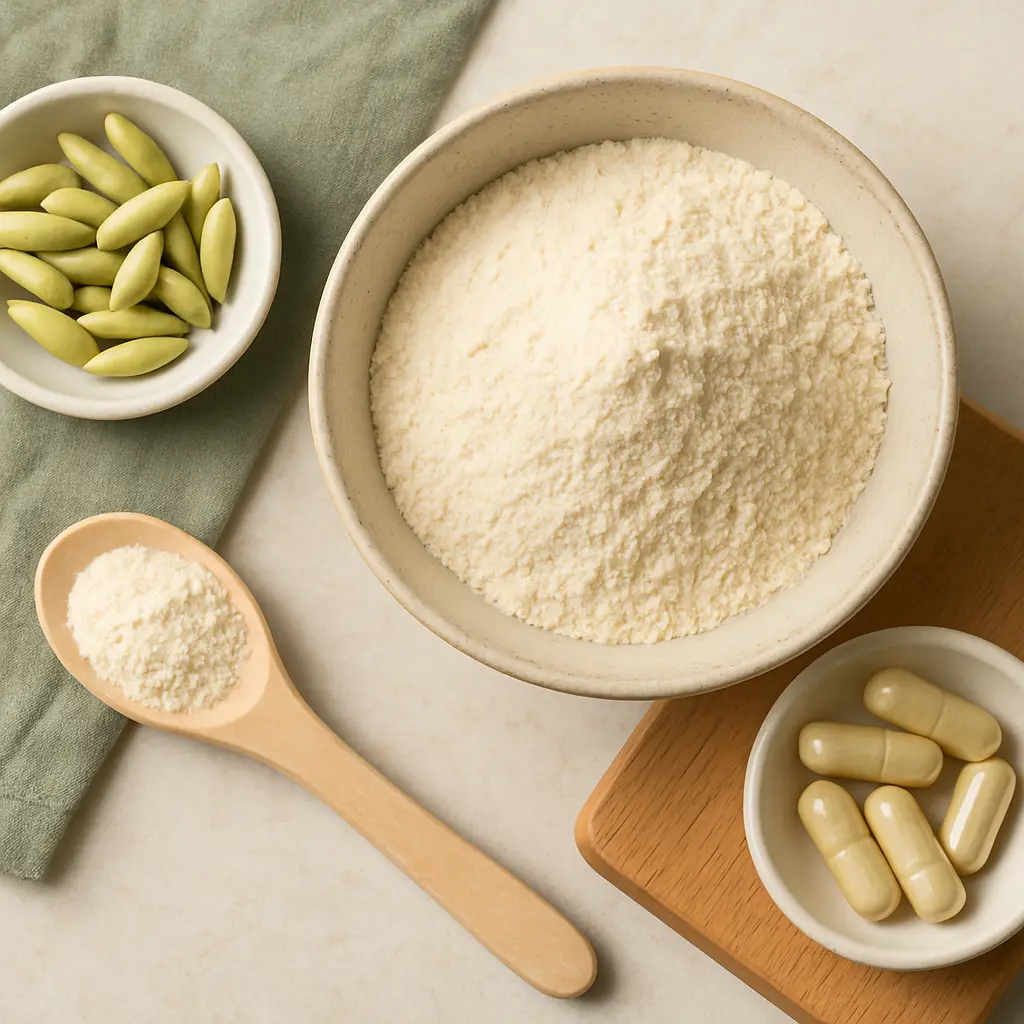
Guar gum is a versatile ingredient derived from the seeds of the guar plant, primarily grown in dry regions of India and Pakistan. Known for its thickening and stabilizing properties, it has a wide array of applications in the food industry, cosmetics, and pharmaceuticals. This article delves into the scientific background of guar gum, explores its impact on health, and discusses its various applications in daily life. We also provide a balanced perspective on its safety and potential side effects.

Scientific Background and General Context
Guar gum is extracted from the seeds of the guar plant (Cyamopsis tetragonoloba), which is part of the legume family. These plants grow to a height of 3 to 6 feet and produce pods containing small, round seeds. India is the world’s largest producer of guar gum, accounting for roughly 80% of the global supply. The seeds undergo a milling and dehusking process to produce guar gum powder, a fine, odorless, and tasteless substance.Guar gum, also known as guaran, is chiefly composed of galactomannan polysaccharides. Its molecular structure allows it to form gels, which is why it is widely used as a thickening agent and emulsifier in various industries. The ability of guar gum to swell in cold water makes it particularly valuable in food applications, as it can modify the texture and consistency of products without altering their flavor.

Properties and Applications of Guar Gum
Food Industry Applications
In the food industry, guar gum is utilized as a thickener, stabilizer, and emulsifier. It plays a critical role in improving the texture and shelf-life of products. For instance, in ice cream, guar gum prevents the formation of ice crystals, resulting in a smoother, creamier texture. Similarly, in gluten-free baking, it helps retain moisture, enhancing the crumb structure and extending the freshness of baked goods.Low-fat and reduced-calorie products also benefit from guar gum, as it can improve texture without adding significant calories. It is commonly found in salad dressings, sauces, and beverages. The typical concentration of guar gum in food products ranges from 0.2% to 2% by weight, depending on the desired consistency and application.
Pharmaceutical and Cosmetic Uses
Beyond its culinary uses, guar gum is employed in pharmaceutical and cosmetic products. In pharmaceuticals, it aids in drug delivery systems. Its ability to form gels and films makes it suitable for controlled-release formulations, where active ingredients are delivered gradually over time. Research into guar gum-based hydrogels and biofilms is ongoing, focusing on targeted drug delivery to specific tissues or organs. The biodegradable and non-toxic nature of guar gum makes it an ideal material for these applications, minimizing the risk of long-term accumulation in the body or the environment.In cosmetics, guar gum is often used as a thickener in lotions and creams. It provides a smooth, non-greasy texture and helps stabilize emulsions, ensuring that the product maintains its consistency throughout its shelf life.
Impact of Guar Gum on Health
The health effects of guar gum have been a subject of interest for researchers, particularly concerning its impact on cholesterol levels, blood glucose regulation, blood pressure, and appetite control.
Lipid Profile and Cholesterol
Guar gum has been studied for its potential to improve lipid profiles. A review of 19 clinical studies found that guar gum supplementation was associated with a significant reduction in total cholesterol and LDL cholesterol levels in adults. However, it did not have a notable impact on triglyceride levels or HDL cholesterol. The fiber content in guar gum is thought to bind to bile acids in the intestines, promoting their excretion and subsequently lowering cholesterol levels.
Blood Glucose Management
Guar gum’s effect on glycemic control has also been explored. It appears to lower hemoglobin A1c levels, an indicator of long-term blood sugar control, particularly in individuals with type 2 diabetes. The viscous nature of guar gum slows carbohydrate absorption, thereby moderating postprandial blood glucose spikes. A dose-dependent effect has been observed, with higher intakes of over 15 grams per day showing more pronounced results in fasting blood glucose reduction.
Blood Pressure Regulation
Research into guar gum’s influence on blood pressure suggests that it may contribute to a moderate reduction in both systolic and diastolic blood pressure. This effect has been most apparent in individuals with type 2 diabetes and metabolic syndrome, particularly when doses exceed 15 grams per day and are consumed consistently for more than 12 weeks.
Appetite Control and Weight Management
Guar gum is also recognized for its potential role in appetite control and weight management. Partially hydrolyzed guar gum, a soluble fiber, can prolong digestion and enhance satiety after meals. Some studies have shown that consuming 2 grams per serving can effectively reduce calorie intake between meals by approximately 20%. When combined with protein, guar gum’s satiating effects are further amplified.
Daily Use and Lifestyle Applications
Guar gum is incorporated into various dietary products to enhance texture and nutritional value. In supplements, it is often used for its fiber content, which supports digestive health. The usual dosage in functional foods and weight management products ranges from 2 to 5 grams per serving.For those with metabolic disorders, higher doses exceeding 15 grams daily may be recommended, though such use should be supervised by a healthcare professional to ensure safety and efficacy. While guar gum is low in calories, providing about 3 calories per gram, it lacks essential vitamins and minerals, underscoring the importance of a balanced diet alongside supplementation.
Balanced Perspective and Safety
While guar gum has multiple benefits, it’s essential to consider potential side effects. In some individuals, high doses can cause gastrointestinal discomfort, such as bloating and gas, due to its high fiber content. Therefore, it is advisable to increase intake gradually to allow the digestive system to adjust.Moreover, individuals with a history of intestinal obstructions should exercise caution, as excessive fiber intake can exacerbate these conditions. As with any supplement or dietary change, it is recommended to consult with a healthcare provider, especially for individuals with pre-existing health conditions or those taking medication.In conclusion, guar gum is a multifunctional ingredient with a wide range of applications and health benefits. Its role as a thickener and stabilizer makes it indispensable in various industries, while its health-promoting properties offer promising benefits for cholesterol management, blood sugar control, and appetite regulation. As with any dietary addition, mindful consumption and professional guidance can help maximize its benefits safely.


