
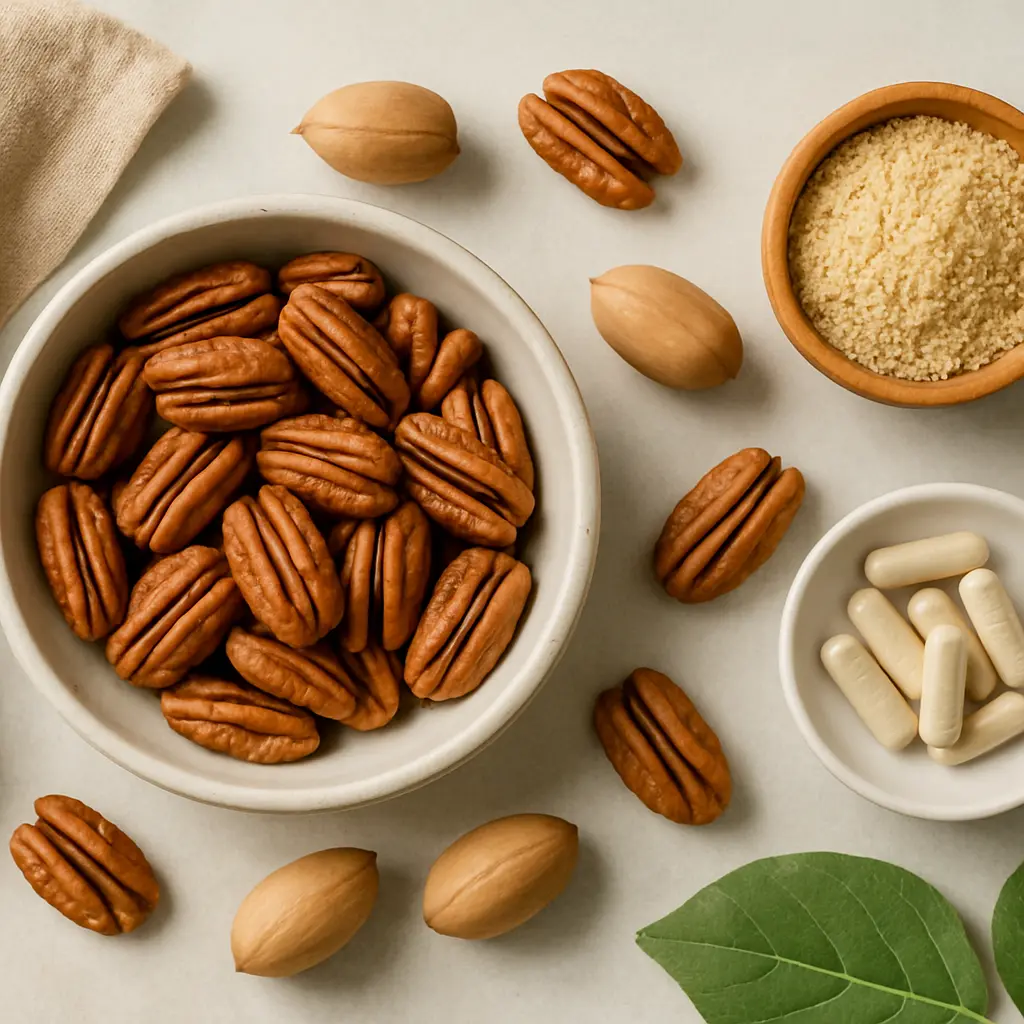
Pecans: Nutritional Powerhouse from the American Heartland
In this page
Pecans, also known as American nuts, are harvested from the Carya illinoinensis tree native to North America. Renowned for their rich, buttery flavor and impressive nutritional profile, pecans are a staple in diets worldwide. They are associated with various health benefits and culinary versatility, making them a valuable addition to any balanced diet. This article explores the cultivation, nutritional value, and applications of pecans, along with their potential alternatives.

Scientific Background and General Context
Pecans are a member of the hickory family and are primarily grown in the southern United States. The trees flourish in warm, temperate climates, requiring hot summers for maturation and frost-free winters. The pecan tree can reach heights of up to 131 feet, beginning to produce nuts around six to ten years after planting. Notably long-lived, these trees can bear nuts for several centuries, contributing significantly to the agricultural heritage of regions such as Texas, Georgia, New Mexico, Oklahoma, and Louisiana. The U.S. dominates global pecan production, accounting for 80-90% of the market, although cultivation has expanded to countries like Australia, China, Brazil, and South Africa in response to increasing demand.

Daily Use and Lifestyle Applications
Culinary Uses and Versatility
Pecans are a versatile ingredient in a wide array of dishes, celebrated for their ability to enhance both sweet and savory recipes. The classic pecan pie is a quintessential American dessert, known for its caramel-like flavor imparted by the nuts. They are also popular as a crunchy addition to salads, complementing ingredients such as arugula, dried fruits, and cheese. When incorporated into homemade granola, energy bars, or oatmeal, pecans provide healthy fats and fiber, contributing to a more nutritious breakfast or snack.
Creative Culinary Alternatives
For those interested in exploring beyond traditional uses, roasted pecans serve as a delightful snack, either salted or sweetened with cinnamon and honey. Ground pecans can be transformed into a creamy nut butter, offering a delightful alternative to conventional peanut butter. This homemade spread is not typically found in stores, adding a unique touch to any pantry. Pecan oil, with its subtle flavor, is ideal for salad dressings or as a base for vegan creamy pastes, showcasing the nut’s versatility in various culinary applications.
Balanced Perspective and Safety
Nutritional Insights
Pecans are nutrient-dense, offering a substantial caloric intake, with approximately 690 calories per 100 grams. A daily serving of around 1 ounce (approx. 28 grams) is recommended to reap their nutritional benefits without excessive calorie intake. This portion provides approximately 200 calories and an abundance of essential nutrients, including unsaturated fats, fiber, B vitamins, magnesium, copper, and zinc. Pecans are particularly rich in monounsaturated fats, which are beneficial for heart health, as well as antioxidants that support overall wellness.
Consumption Guidelines and Safety
While pecans are a healthy addition to the diet, moderation is key due to their high caloric content. Consuming them in recommended portions ensures that they complement rather than overwhelm a balanced diet. Additionally, individuals with nut allergies should exercise caution and consult a healthcare provider before incorporating pecans into their diet. Overall, pecans are a nutritious choice, contributing to heart health, weight management, and dietary satisfaction.
Alternatives to Pecans
Exploring Nut Substitutes
For those seeking variety or alternatives to pecans, several other nuts can serve as suitable replacements. Walnuts, with a similar texture and a slightly bitter taste, are the closest substitute, though they are less sweet. Almonds offer a more neutral flavor and crisp texture, making them ideal for recipes where these qualities are preferred. Cashews, known for their creamy texture when ground, are excellent for creamy sauces and spreads, providing a milder flavor profile. Hazelnuts, with their robust nutty aroma, are perfect for enhancing chocolate desserts or pralines, adding a deeper, more pronounced flavor to dishes.
Overall, pecans hold a cherished place in both traditional and modern culinary practices, celebrated for their unique taste and nutritional value. Whether enjoyed alone or as part of a diverse diet, they offer a wealth of health benefits and culinary possibilities. By exploring alternative nuts, one can maintain variety and satisfy individual taste preferences while enjoying the healthful properties that nuts bring to the diet.


