
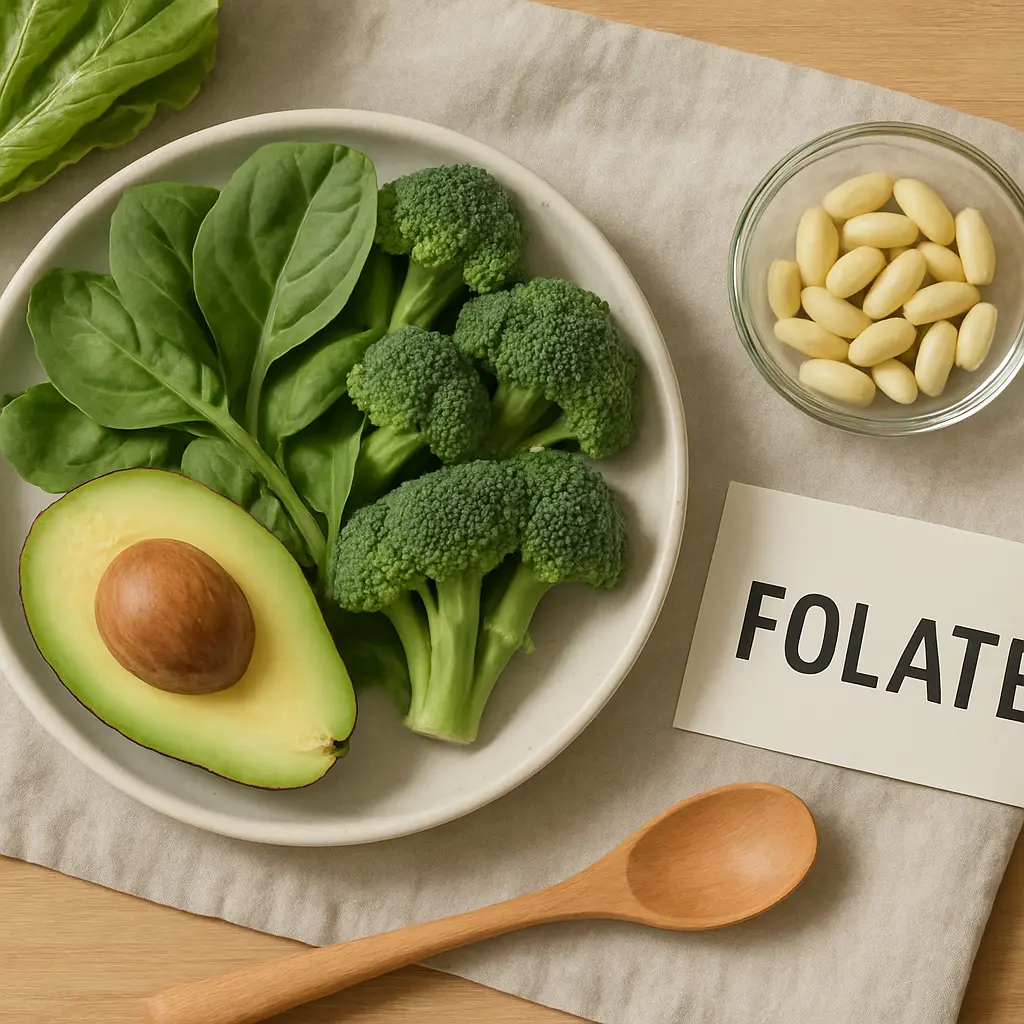
The Importance of Folate: Understanding Vitamin B9
In this page
Folate, or vitamin B9, is an essential micronutrient pivotal in numerous bodily functions, from DNA synthesis to cell division. Given its crucial role in maintaining health, it’s vital to understand how folate operates, its dietary sources, and its significance, especially for certain demographics such as pregnant women. This article delves into the scientific background of folate, its daily applications, potential deficiency impacts, and the importance of a balanced intake.

Scientific Background and General Context
Folate, known scientifically as vitamin B9, is part of the complex B vitamin family. It is indispensable for several metabolic processes, particularly those involving nucleic acids. Our bodies rely on folate to synthesize purines and pyrimidines, which are the building blocks of DNA and RNA, as well as to metabolize certain amino acids. Once ingested from dietary sources, folate transforms into its active form, tetrahydrofolate, which functions as a coenzyme. This conversion is necessary for the vitamin to engage in enzymatic reactions, facilitating cell division and growth.Humans cannot synthesize folate in sufficient amounts, making dietary intake essential. The primary sources of folate include leafy greens, legumes, seeds, and some fruits like oranges and bananas. Fortified foods, such as cereals, also contribute significantly to folate intake, especially in populations where natural dietary sources might be less accessible.

Daily Use and Lifestyle Applications
Folate’s role extends beyond mere metabolic processes. It is vital for rapidly dividing cells, a characteristic essential for fetal development, blood cell formation, and maintaining the health of gastrointestinal lining and nerve sheath myelination. For pregnant women, adequate folate levels are critical to prevent neural tube defects in the developing fetus. The neural tube forms early in pregnancy, often before a woman even knows she is pregnant, highlighting the importance of sufficient folate intake during the childbearing years.Additionally, folate plays a crucial role in cardiovascular health by regulating homocysteine levels, an amino acid in the blood. Elevated homocysteine is associated with an increased risk of cardiovascular diseases such as heart attacks and strokes. Folate, in conjunction with other B vitamins like B12 and B6, helps convert homocysteine into methionine, thereby reducing its concentration and mitigating cardiovascular risks.In terms of mental health, emerging research suggests a link between folate deficiency and mood disorders. Folate is involved in the production of neurotransmitters like serotonin and dopamine, which are crucial for mood regulation. Although more research is needed, ensuring adequate folate intake may support emotional well-being and reduce the risk of depressive symptoms.
Deficiency and Health Implications
Folate deficiency can have severe health implications, given its extensive role in cell function and division. The most well-known consequence is megaloblastic anemia, a condition where red blood cells are larger than normal and not fully developed, leading to symptoms like fatigue, weakness, and difficulty concentrating.Beyond anemia, folate deficiency can manifest as neuropathic symptoms, including tingling sensations in the extremities, disturbances in mood, and impaired cognitive function. In severe cases, deficiency can lead to developmental issues in children, increased risk of cardiovascular diseases, osteoporosis, and certain types of cancer due to impaired DNA repair mechanisms.For women, particularly those who are pregnant or planning to become pregnant, folate deficiency poses significant risks. These include neural tube defects in the offspring, increased risk of miscarriage, premature birth, and low birth weight. Consequently, women in their reproductive years are often advised to ensure adequate folate intake through diet and, if necessary, supplementation.
Dietary Recommendations and Sources
The recommended dietary allowance (RDA) for folate varies by age, gender, and life stage. For adults, the RDA is approximately 400 micrograms per day, with increased needs during pregnancy (600 micrograms) and lactation (500 micrograms). Children and adolescents require lower amounts, which gradually increase as they approach adulthood.Dietary sources of folate include:
- Leafy greens such as spinach, kale, and broccoli
- Legumes like lentils, chickpeas, and black beans
- Fruits such as oranges, bananas, and avocados
- Fortified cereals and bread
- Nuts and seeds
Despite the availability of folate-rich foods, certain populations may struggle to meet their needs through diet alone due to dietary preferences, absorption issues, or increased physiological demands. In such cases, folate supplements can be a beneficial adjunct to ensure adequate intake.
Balanced Perspective and Safety
While ensuring sufficient folate intake is crucial, excessive consumption, particularly from supplements, can lead to adverse effects. High levels of folate may mask vitamin B12 deficiency symptoms, potentially leading to neurological damage if left undiagnosed. Therefore, it’s important to adhere to recommended dosages and consult healthcare professionals before starting any supplementation regime.Additionally, while folate supplementation can support health, it should not replace a balanced diet rich in diverse nutrients. Whole foods provide not only folate but also other essential vitamins, minerals, and dietary fibers necessary for overall well-being.In conclusion, folate is a vital nutrient with a broad impact on health, from DNA synthesis and cell division to cardiovascular and mental health. Understanding its dietary sources, recommended intake, and potential deficiency implications is essential for maintaining optimal health and preventing disease. By prioritizing a diet rich in folate and consulting healthcare providers when necessary, individuals can ensure they meet their nutritional needs effectively.


