
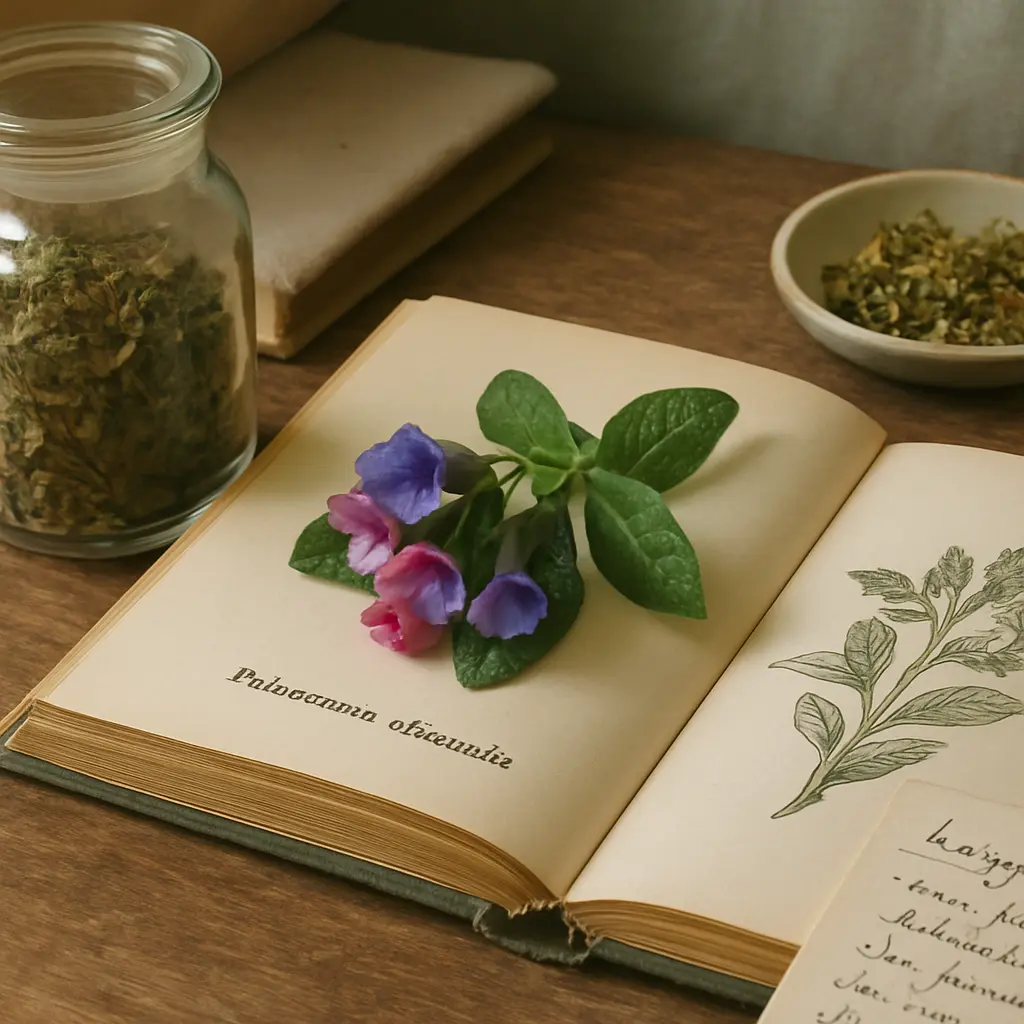
Exploring the Health Benefits and Uses of Lungwort (Pulmonaria officinalis)
In this page
Lungwort (Pulmonaria officinalis), a perennial plant from the Boraginaceae family, has been recognized for its historical association with respiratory support in traditional medicine. This article delves into its botanical characteristics, chemical composition, culinary applications, and potential health benefits. While rooted in folklore, lungwort’s modern scientific examination reveals intriguing aspects of its properties and utility.

Scientific Background and General Context
Lungwort, scientifically known as Pulmonaria officinalis, belongs to a family of plants that includes other notable members such as comfrey and forget-me-not. This perennial herb thrives in deciduous forests and is native to central and southern Europe, reaching as far east as western Russia. In spring, it produces hairy stems with racemose inflorescences, serving as an early nectar source for pollinators.The plant’s distinctive leaves, adorned with white spots and a network of veins, contribute to its unique appearance. Its vibrantly colored, funnel-shaped flowers range from purple-pink to blue-violet hues, attracting bees and solitary bees alike. Although often found in the wild, lungwort can also be cultivated in garden settings, adding both aesthetic and ecological value.

Botanical Characteristics and Habitats
Lungwort typically grows to a height of about 20 inches. It displays a rugged charm thanks to its hairy stems and speckled leaves, which range from ovate to lanceolate shapes. Its natural habitat includes the deciduous forests and lower mountain regions of Europe, preferring calcium-rich soils.The plant’s flowering period occurs early in the season, often beginning in March. This early bloom provides a crucial food source for pollinating insects when other floral resources are scarce. As a result, lungwort plays a vital role in local ecosystems, supporting biodiversity and pollinator health.
Chemical Composition and Valued Compounds
Lungwort’s chemical profile is rich and varied, containing polysaccharide-rich plant mucilage, tannins, flavonoids, phenolic acids, and triterpene saponins. These compounds contribute to the plant’s hydrophilic properties and biological activity, notably its capacity to form a thick, sticky decoction when brewed.Particularly noteworthy are its low-molecular-weight phenolic compounds, recognized for their antioxidant properties. Additionally, the presence of allantoin, a compound valuable in the cosmetic industry for its soothing effects, highlights lungwort’s diverse applications.
Antioxidant Properties
The phenolic compounds in lungwort, such as rosmarinic acid, exhibit significant antioxidant activity. These substances can neutralize harmful nitrogen molecules produced during oxidative stress, thereby protecting proteins and lipids in the bloodstream from damage. This antioxidant potential has been corroborated through both basic laboratory tests and experiments using human plasma.
Potential Anticoagulant Effects
Animal studies suggest that lungwort contains glycopeptides with anticoagulant properties. These compounds may inhibit blood clotting by interfering with fibrinogen transformation, a key process in clot formation. Such properties indicate a potential for reducing mortality in models of excessive blood clotting.
Daily Use and Lifestyle Applications
Lungwort’s culinary and historical uses are as varied as its chemical composition. Traditionally, it supplemented diets during the lean months of early spring in rural Central Europe. Young leaves, harvested before flowering, were incorporated into soups, fillings, and salads, often alongside other spring herbs like nettles and sorrel. Their mildly bitter taste was balanced with animal or vegetable fats.
Culinary Traditions in Europe
In German and Czech cuisines, lungwort has been used in dumpling fillings or pancake ingredients, sometimes combined with cottage cheese, onions, and eggs. Alpine regions also embraced this culinary practice. Additionally, in some Eastern European areas, lungwort leaves served as a cover for baked fish or potatoes, similar to how horseradish or sorrel leaves are used. Lungwort flowers can even add visual appeal to both savory and sweet dishes.
Balanced Perspective and Safety
Despite its long-standing presence in traditional medicine, scientific literature on lungwort’s health effects remains limited. Most existing data stem from basic research, primarily in vitro and animal models, without sufficient well-designed human clinical trials.Historically, lungwort’s names—both in English (“lungwort”) and Latin (“pulmonaria”)—reflect its purported respiratory benefits. However, contemporary studies have yet to establish a direct link between lungwort and improved lung function in humans.
Anti-inflammatory Potential
Laboratory studies have shown that lungwort extracts can inhibit COX-2 enzyme activity, a key player in inflammatory processes. These findings, supported by in silico analyses, suggest that certain lungwort compounds might directly interact with this enzyme, offering potential anti-inflammatory benefits.
Protection of the Nervous System
Further research indicates that water and alcohol extracts of lungwort may inhibit enzymes like acetylcholinesterase and tyrosinase. Inhibiting these enzymes could be relevant for protecting the nervous system and potentially benefiting neurodegenerative conditions.
Conclusion
Lungwort (Pulmonaria officinalis) presents a fascinating case of a plant with rich historical use and emerging scientific interest. Its diverse chemical composition suggests potential health benefits that merit further exploration. While lungwort’s culinary applications showcase its versatility, its medicinal prospects require cautious optimism until more robust human studies are conducted. As with any herbal remedy, it is advisable to consult healthcare professionals before incorporating lungwort into your health regimen.




