
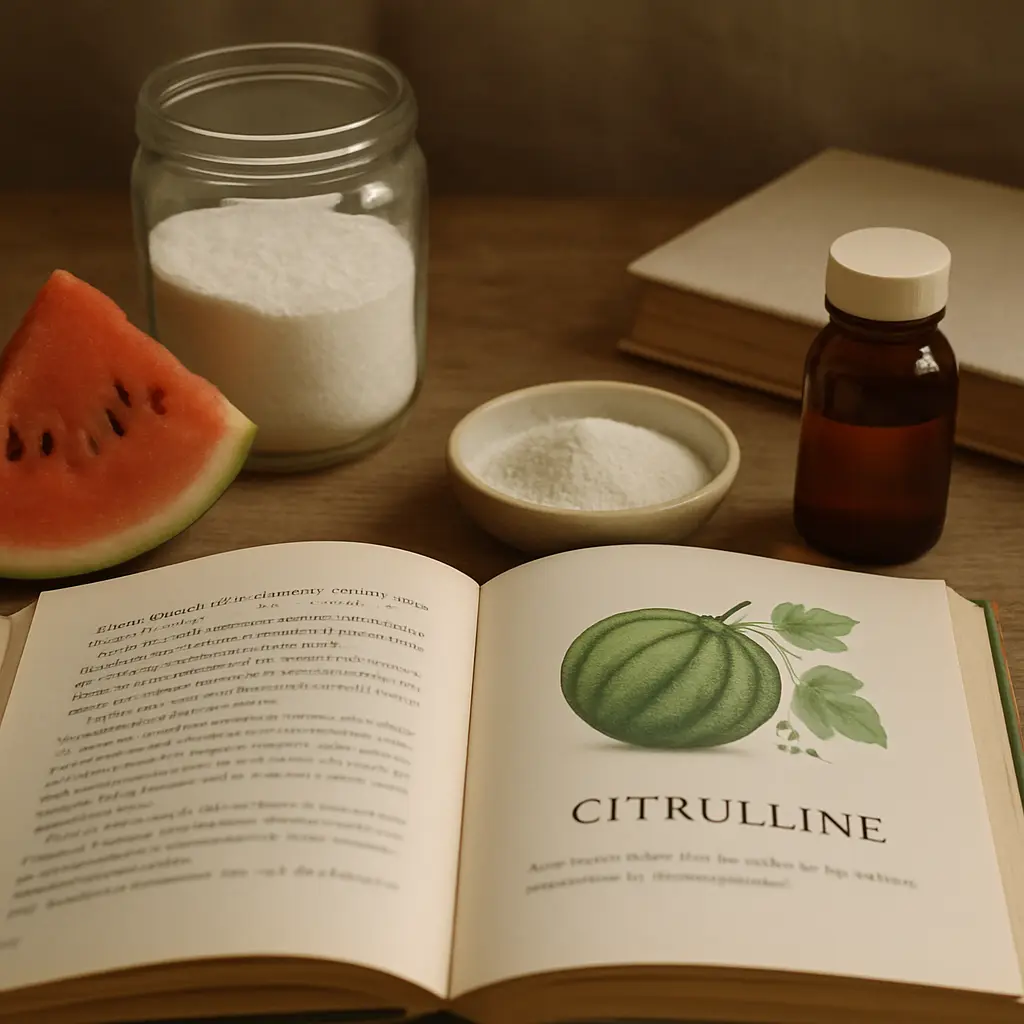
Understanding Citrulline: A Non-Protein Amino Acid with Powerful Health Benefits
In this page
Citrulline, a non-protein amino acid primarily found in watermelons, plays a significant role in the human body, particularly in vasodilation and nitric oxide production. Although it is not incorporated into proteins like other amino acids, it still holds great potential for improving health and athletic performance. This article delves into the scientific background of citrulline, its dietary sources, and how it can be effectively integrated into daily life. Additionally, we will explore the safety and potential benefits of citrulline supplementation for various populations, including athletes and individuals with blood pressure concerns.

Scientific Background and General Context
Citrulline is an amino acid that differs from common proteinogenic amino acids, as it is not directly involved in the formation of proteins. Instead, it plays a pivotal role in the urea cycle, a process that helps convert ammonia, a waste product, into urea for excretion from the body. Citrulline is also involved in the synthesis of another amino acid, arginine, which is a precursor to nitric oxide—a key molecule for vascular health.Nitric oxide is crucial for maintaining vascular tone and function. It helps relax blood vessels, increasing blood flow and reducing blood pressure. This makes citrulline particularly interesting for its potential cardiovascular benefits. Furthermore, enhanced nitric oxide production can lead to improved delivery of oxygen and nutrients to muscles, which is beneficial for exercise performance and recovery.

Dietary Sources of Citrulline
The most well-known dietary source of citrulline is watermelon. This juicy fruit contains significant amounts of citrulline, especially in the rind, which is often discarded. Other sources include cucumbers, pumpkins, and gourds, but these contain much lower concentrations. For those who do not enjoy or have access to watermelon, citrulline supplements are a viable alternative.Supplemental citrulline is often found in the form of citrulline malate, a compound formed by combining citrulline with malic acid. This form is beneficial due to its enhanced solubility and absorption compared to pure citrulline. It is widely used in sports nutrition, offering a convenient way to obtain adequate amounts without consuming large quantities of watermelon.
Benefits of Citrulline Supplementation
Citrulline’s primary benefit stems from its ability to increase arginine levels in the blood, which subsequently boosts nitric oxide production. This cascade of biological events leads to improved blood flow, which is advantageous for both athletes and individuals with cardiovascular health concerns.For athletes, enhanced blood flow means improved endurance and reduced fatigue, as more oxygen and nutrients are delivered to working muscles. This can result in better performance, quicker recovery times, and decreased muscle soreness post-exercise. Athletes often use citrulline supplements as part of their pre-workout regimen to capitalize on these benefits.In terms of cardiovascular health, citrulline supplementation may aid in the management of hypertension. By promoting vasodilation, it can help lower blood pressure, which is particularly beneficial for individuals with elevated levels. Although citrulline should not replace prescribed medications, it may serve as an adjunctive therapy to support overall cardiovascular wellness.
Daily Use and Lifestyle Applications
Incorporating citrulline into daily life can be straightforward, whether through diet or supplementation. For those opting for supplements, a typical starting dose is around six grams of citrulline malate, taken daily. This can be adjusted based on individual needs and goals, with some research suggesting doses up to 15 grams can be beneficial.For athletes, citrulline is often consumed about 30 minutes before exercise to maximize its effects during physical activity. On non-training days, the daily dose can be divided into smaller portions to maintain steady levels of nitric oxide production and support cardiovascular health.Combining citrulline with other supplements, such as arginine, can further enhance its effects. This combination is thought to amplify nitric oxide production and offer dual support for cardiovascular and muscular health.
Balanced Perspective and Safety
While citrulline offers promising benefits, it is important to approach supplementation with a balanced perspective. Most studies on citrulline have found it to be safe and well-tolerated, with few reported side effects. However, as with any supplement, individual responses can vary, and it is advisable to consult with a healthcare provider before beginning any new supplement regimen, especially for those with pre-existing health conditions or who are taking other medications.Citrulline should be seen as a complement to a healthy lifestyle rather than a standalone solution. It is most effective when combined with regular physical activity, a balanced diet, and other healthy habits that support cardiovascular health and overall well-being.
Conclusion
Citrulline is a non-protein amino acid with significant potential for supporting health, particularly in the areas of exercise performance and cardiovascular function. Whether consumed through diet or supplementation, it can play a valuable role in enhancing blood flow, reducing fatigue, and supporting muscle recovery. As research continues to uncover more about its benefits, citrulline may become an increasingly popular choice for athletes and individuals seeking to improve their cardiovascular health. However, as with any supplement, it is important to use citrulline responsibly and as part of a comprehensive approach to health and wellness.




