
The Multifaceted Health Benefits of Black Elderberry (Sambucus nigra)
In this page
Black elderberry, known scientifically as Sambucus nigra, is a plant that has been celebrated for its multifarious benefits and uses throughout history. Originating from Europe and parts of Asia, black elderberry stands out not only for its environmental significance but also for its traditional and contemporary health applications. This article delves into the characteristics, bioactive components, and health benefits of black elderberry, exploring how it can support immune function, cognitive health, and skin vitality.

Scientific Background and General Context
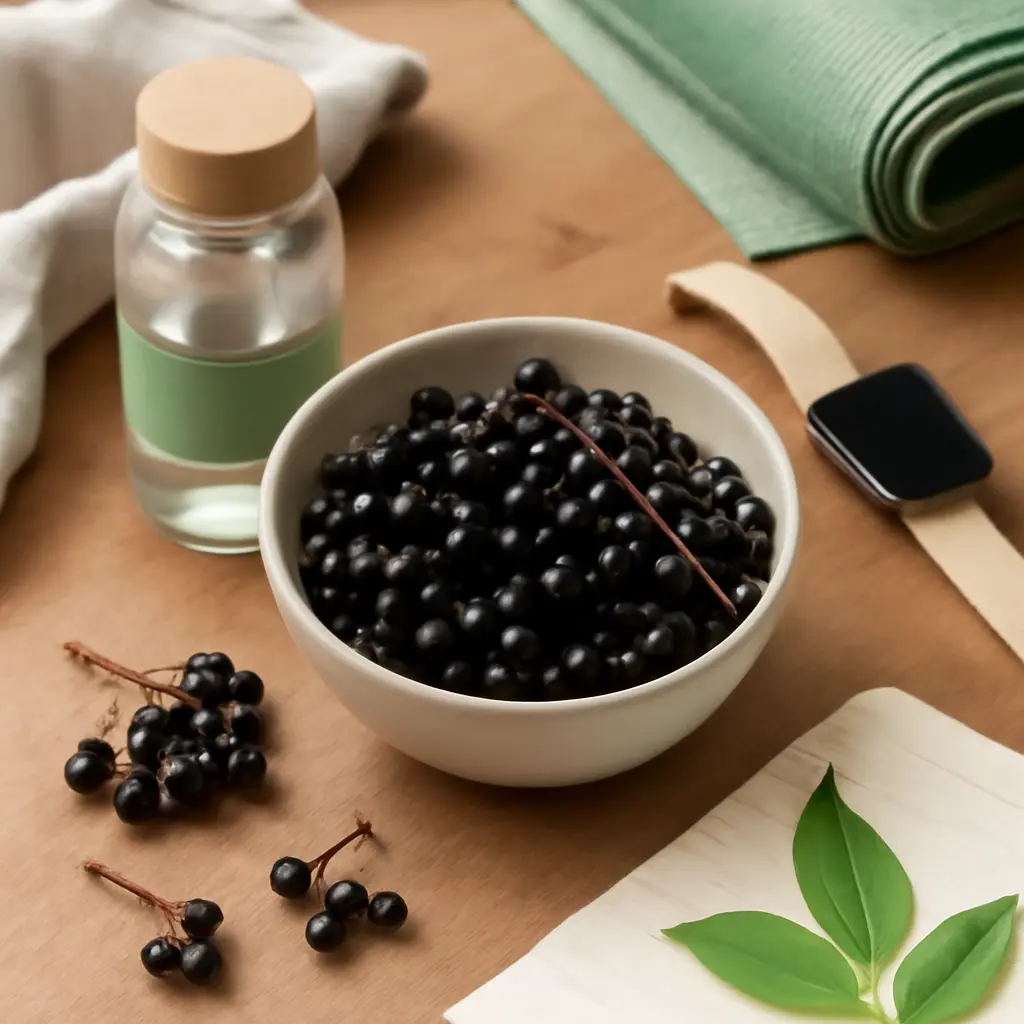
Black elderberry belongs to the Adoxaceae family and is easily distinguishable by its bushy appearance and distinctive dark berries. Typically growing between 6 to 20 feet, this plant is widespread in rural areas, forests, and even in more neglected terrains. The flowers and fruits of black elderberry have long played a role in traditional medicine and folklore. For centuries, it was believed to harbor protective properties against malevolent spirits, prompting many to plant it near their homes. The plant’s various parts—bark, leaves, flowers, and berries—have been utilized in different cultural rituals and medicinal practices. Modern science has shifted focus to understanding and harnessing the chemical compounds in black elderberry that contribute to its health benefits.
Key Characteristics of Black Elderberry
Flowering and Fruiting
In late spring and early summer, black elderberry produces clusters of small, creamy-white flowers that emit a strong, distinctive aroma. These flowers attract numerous pollinators, particularly bees, making the plant valuable for maintaining ecological balance. Come late summer to early fall, these flowers give way to clusters of dark, spherical berries. These berries not only serve as a food source for various bird species, aiding in seed dispersal, but they also boast a myriad of bioactive compounds.
Industrial Applications
Black elderberry has found its place in multiple industries. In the food sector, its berries are processed into syrups, jams, and wines. The dietary supplement industry recognizes the elderberry for its potential immune-boosting properties. Meanwhile, the cosmetic industry leverages its compounds for anti-inflammatory and anti-aging products. Additionally, the textile industry utilizes elderberry as a source of natural dyes, producing shades of violet and blue.
Bioactive Compounds and Their Benefits
Black elderberry is notably rich in bioactive compounds, making it an object of study for its vast potential health benefits. Among these compounds are anthocyanins, which give the berries their dark hue and are the most extensively researched for their health benefits.
Anthocyanins and Their Metabolism
Anthocyanins are powerful antioxidants. The average daily intake of anthocyanins from various sources, such as chokeberries and red cabbage, ranges between 180 to 215 mg. A pharmacokinetic study of black elderberry extract revealed that only a small percentage of these compounds are excreted unchanged, suggesting low bioavailability. This implies that the gut microbiome might be pivotal in anthocyanin absorption, potentially enhancing the body’s uptake of these compounds.
Flavonoids, Phenolic Acids, and Sterols
Beyond anthocyanins, black elderberry contains flavonoids, phenolic acids, and sterols, each contributing to the plant’s antioxidant properties. Flavonoids such as quercetin, phenolic acids like chlorogenic acid, and sterols like beta-sitosterol have been studied for their potential in reducing oxidative stress. These compounds may aid in inflammation reduction and immune system support.
Black Elderberry and Immune Function
One of the most compelling benefits of black elderberry is its role in supporting immune function. Rich in antioxidants and antimicrobial properties, elderberry extracts could potentially reduce the duration and severity of cold and flu symptoms if taken promptly. Some clinical studies have suggested that elderberry preparations, when administered within 48 hours of symptom onset, may alleviate symptoms of respiratory infections. Travelers have also reported decreased cold duration and severity when using elderberry extract.
Black Elderberry and Cognitive Health
Emerging studies indicate that black elderberry may also support cognitive function. The plant’s polyphenolic content, including flavonoids and organic acids, is believed to protect brain cells from oxidative damage. Cell studies have demonstrated that elderberry extracts may protect neurons from harm, potentially impeding neurodegenerative processes. Clinical trials have also observed improvements in cognitive functions and reductions in inflammatory markers among individuals consuming elderberry juice.
Black Elderberry and Skin Health
The potential skin health benefits of black elderberry are linked to its bioactive compounds. Preliminary research has shown that elderberry leaf extracts might support wound healing, stimulate key skin cells such as fibroblasts and keratinocytes, and regulate inflammatory factors. Additionally, elderberry’s protective effect against UVB radiation-induced skin damage is noteworthy, suggesting it can help reduce skin inflammation.
Daily Use and Lifestyle Applications
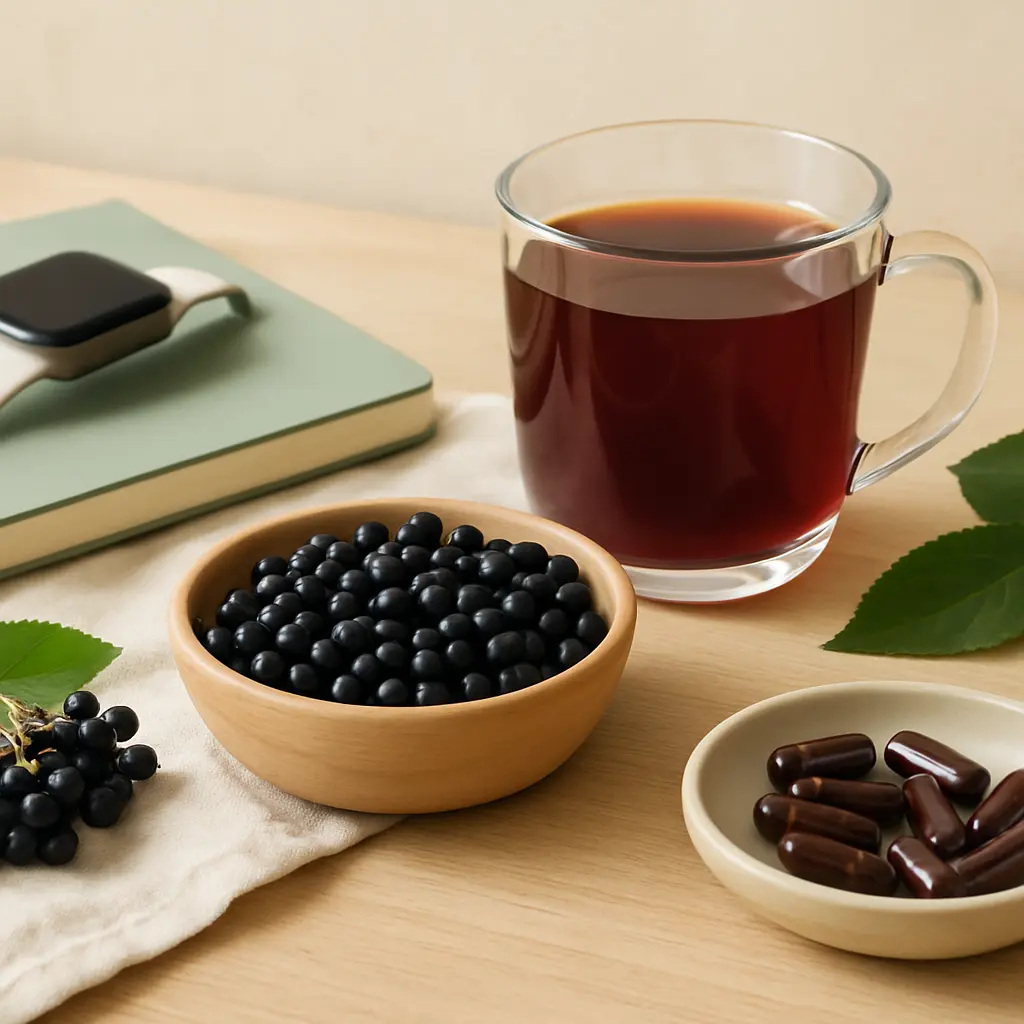
Incorporating black elderberry into daily life is gaining popularity, thanks to its multifaceted benefits. Its extracts can be found in various forms, including teas, syrups, and capsules, making it accessible for different preferences and needs. As with any supplement, it is advisable to consult healthcare professionals before starting any new regimen, especially for individuals with specific health conditions or those taking other medications.
Balanced Perspective and Safety
While black elderberry offers numerous potential health benefits, it is crucial to approach its use with a balanced view. Raw berries, bark, and leaves contain cyanogenic glycosides, compounds that can produce cyanide and may be toxic if consumed in large amounts. Therefore, proper preparation and processing are necessary to ensure safety. Generally, commercially prepared elderberry products are safe for consumption, but individuals should be mindful of dosages and any potential interactions with medications.In summary, black elderberry is a versatile plant with promising health applications supported by scientific research. Its integration into various aspects of health, nutrition, and wellness underscores its potential as a valuable natural resource.


