Exploring Horsetail: A Timeless Herbal Ally
In this page
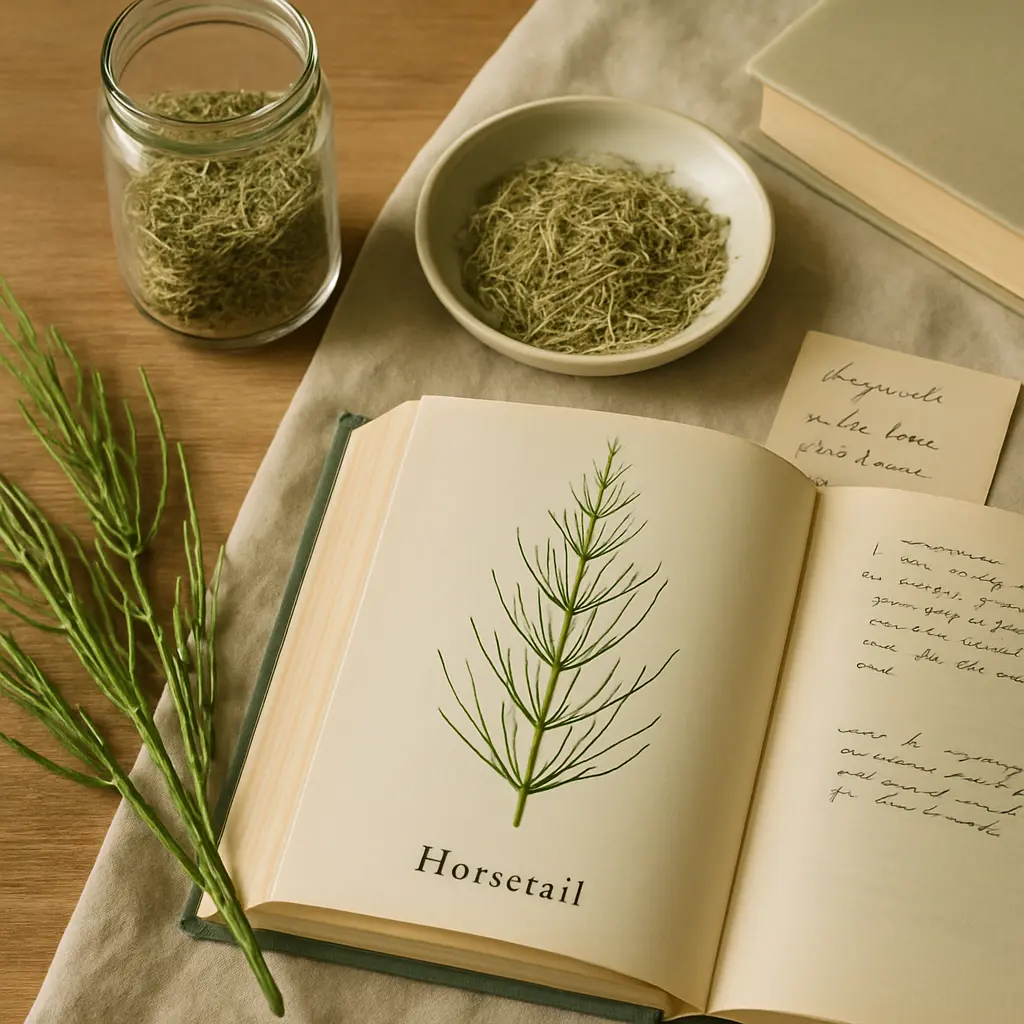
Horsetail, scientifically known as Equisetum arvense, is a perennial plant with a rich history that dates back to the Carboniferous period, making it one of the oldest vascular plants on Earth. This article delves into horsetail’s characteristics, historical applications, and its modern-day uses in herbal medicine. We’ll explore the potential health benefits, including its strengthening, diuretic, and antimicrobial properties, and consider the scientific context surrounding this age-old plant.

Scientific Background and General Context
Horsetail belongs to the Equisetaceae family and is famed for its ancient lineage, surviving millions of years and adapting to diverse environments across the Northern Hemisphere. With an estimated 40 species, horsetail demonstrates a significant evolutionary success, partially attributed to its resilience in moist habitats such as meadows, roadsides, and fields. Its ability to thrive in various environments has made it a subject of study for understanding plant survival and adaptability.The plant’s structure is distinctive, characterized by its segmented, hollow stems that range from 8 to 24 inches in height. These stems have a rough texture due to the presence of silica, contributing to its historical use as a tool for cleaning and scrubbing. Horsetail produces two types of shoots: fertile shoots that appear in the spring, bearing spore-producing cones, and the green, photosynthetic sterile shoots that emerge later in the year.
Historical and Modern Applications of Horsetail
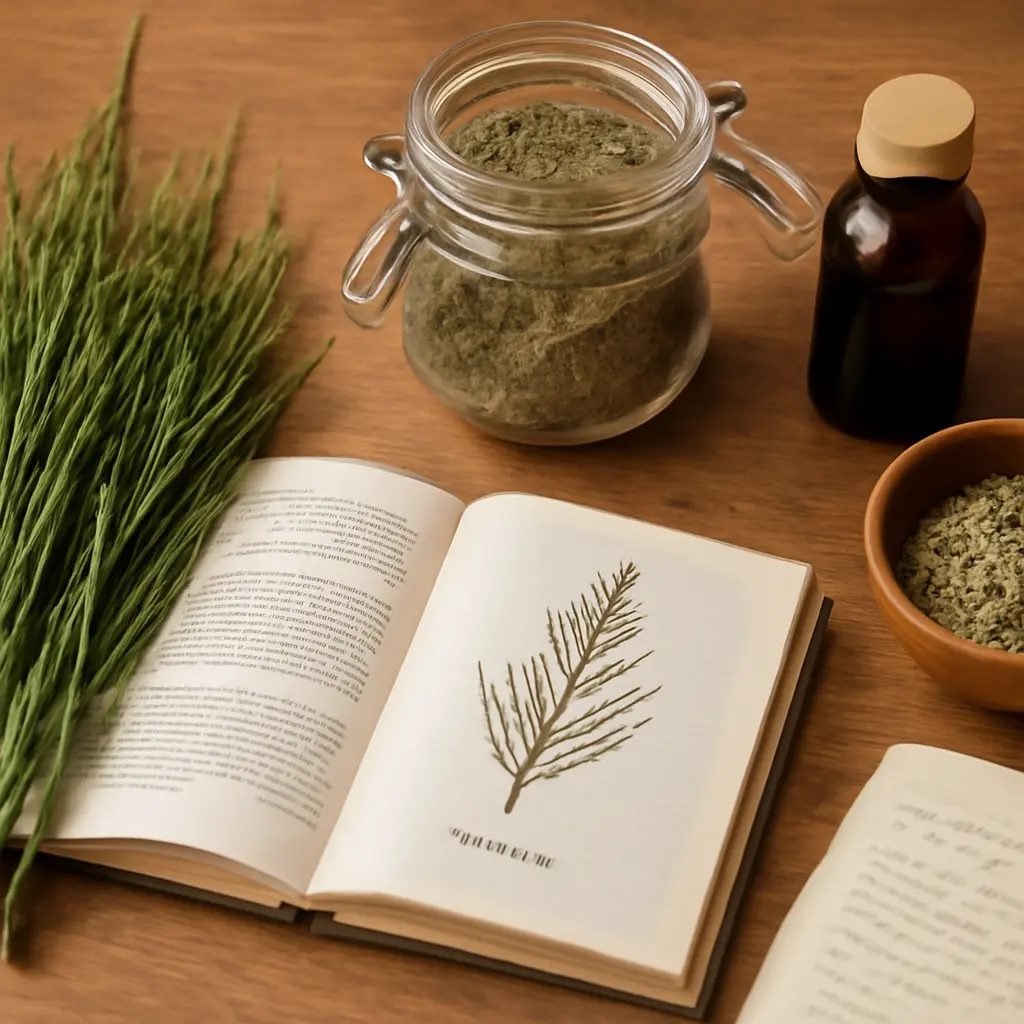
The usage of horsetail dates back to ancient civilizations, where it was esteemed for its medicinal properties. In ancient Greece and Rome, figures such as Dioscorides and Pliny the Elder documented its use for treating wounds and kidney ailments. Its application extended to traditional Chinese medicine, where it was utilized to support kidney health and improve the condition of bones and hair.With the advent of analytical chemistry in the 19th century, horsetail gained scientific recognition due to its high silica content. This compound, known as silicon dioxide (SiO2), is crucial for various biological functions and is the second most abundant element in the Earth’s crust. Silica’s role in promoting bone health and tissue repair underpins much of the plant’s historical and current therapeutic use.In contemporary times, horsetail remains a valued herbal resource, employed in phytotherapy and cosmetic formulations. The plant’s ability to enhance silicon uptake in agriculture has also been explored, emphasizing its potential to fortify plant cell walls and improve resilience against environmental stresses.
Horsetail’s Strengthening Benefits
Horsetail’s reputation as a strengthening agent largely stems from its silica content, which is vital for maintaining healthy connective tissues in both plants and animals. Although clinical studies on horsetail are limited, its effects on bone health and wound healing have been observed in various experimental settings.
Bone Health and Osteoporosis
Research indicates that horsetail supplementation may contribute to increased bone mineral density (BMD), a key factor in preventing osteoporosis. Studies on animal models have demonstrated that horsetail extract can improve bone structure, particularly in cases of bone loss. The plant’s synergy with traditional supplements like calcium and vitamin D suggests that it might enhance cortical thickness and trabecular width, akin to established osteoporosis treatments.
Wound Healing Properties
The potential of horsetail in promoting wound healing has been investigated in studies involving diabetic and healthy animal models. Topical applications of horsetail extract have been shown to accelerate wound closure and stimulate collagen synthesis, an essential component of skin repair. These findings suggest that horsetail could play a supportive role in dermatological health, particularly for individuals with impaired wound healing.
Diuretic Effects of Horsetail
In herbal medicine, horsetail is renowned for its diuretic properties, which facilitate the elimination of excess fluids and toxins from the body. This attribute is particularly beneficial for individuals experiencing water retention or aiming to support kidney function.
Comparable to Pharmaceutical Diuretics
Clinical studies have examined horsetail’s efficacy as a natural diuretic. In one study involving adult males, horsetail extract demonstrated a diuretic effect comparable to conventional pharmaceutical diuretics, without significant electrolyte disturbances or adverse side effects. These findings highlight horsetail’s potential as a safe and effective alternative for managing fluid balance.
Potential in Hypertension Management
The diuretic action of horsetail may also extend benefits to individuals with hypertension. A study involving hypertensive patients revealed that horsetail usage was associated with reduced blood pressure levels. Importantly, no significant biochemical imbalances or toxicity were observed, suggesting that horsetail might be a viable natural adjunct in blood pressure management.
Antimicrobial Properties of Horsetail
Horsetail’s antimicrobial potential has been explored due to its unique chemical composition. Essential oils derived from the plant contain compounds such as thymol, known for their ability to combat various bacterial and fungal pathogens.
Defense Against Bacterial and Fungal Infections
Laboratory studies have shown that horsetail essential oil possesses bactericidal activity against strains like Staphylococcus aureus and Escherichia coli, along with antifungal properties effective against Candida albicans. The plant’s capacity to deposit silica in its tissues might also contribute to a physical barrier against fungal infections, bolstering its antimicrobial defenses.
Daily Use and Lifestyle Applications
Incorporating horsetail into daily routines can be achieved through various forms, including herbal teas, capsules, and topical applications. When considering horsetail supplements or remedies, it is essential to follow recommended dosages and consult healthcare professionals, especially for individuals with pre-existing health conditions or those taking prescription medications.Horsetail tea, for example, can be prepared by steeping dried horsetail in hot water, offering a mild diuretic effect and potential support for hair and nail health. Topical horsetail-infused creams or salves can be applied to promote skin health and assist with wound healing.
Balanced Perspective and Safety
While horsetail presents several potential health benefits, it is crucial to approach its use with caution. The plant contains a compound called thiaminase, which can interfere with vitamin B1 (thiamine) absorption when consumed in large amounts. Therefore, individuals should not consume horsetail excessively and should ensure an adequate dietary intake of thiamine.For those considering horsetail products, sourcing from reputable suppliers and adhering to recommended dosages is paramount. Pregnant or nursing individuals, as well as those with chronic medical conditions, should seek medical advice before incorporating horsetail into their health regimen.In conclusion, horsetail stands as a testament to the enduring value of traditional herbal medicine, offering a range of applications from strengthening bones to supporting kidney function. While modern scientific exploration continues to unveil its potential, a balanced and informed approach to its use ensures that individuals can safely harness the benefits of this ancient botanical ally.