
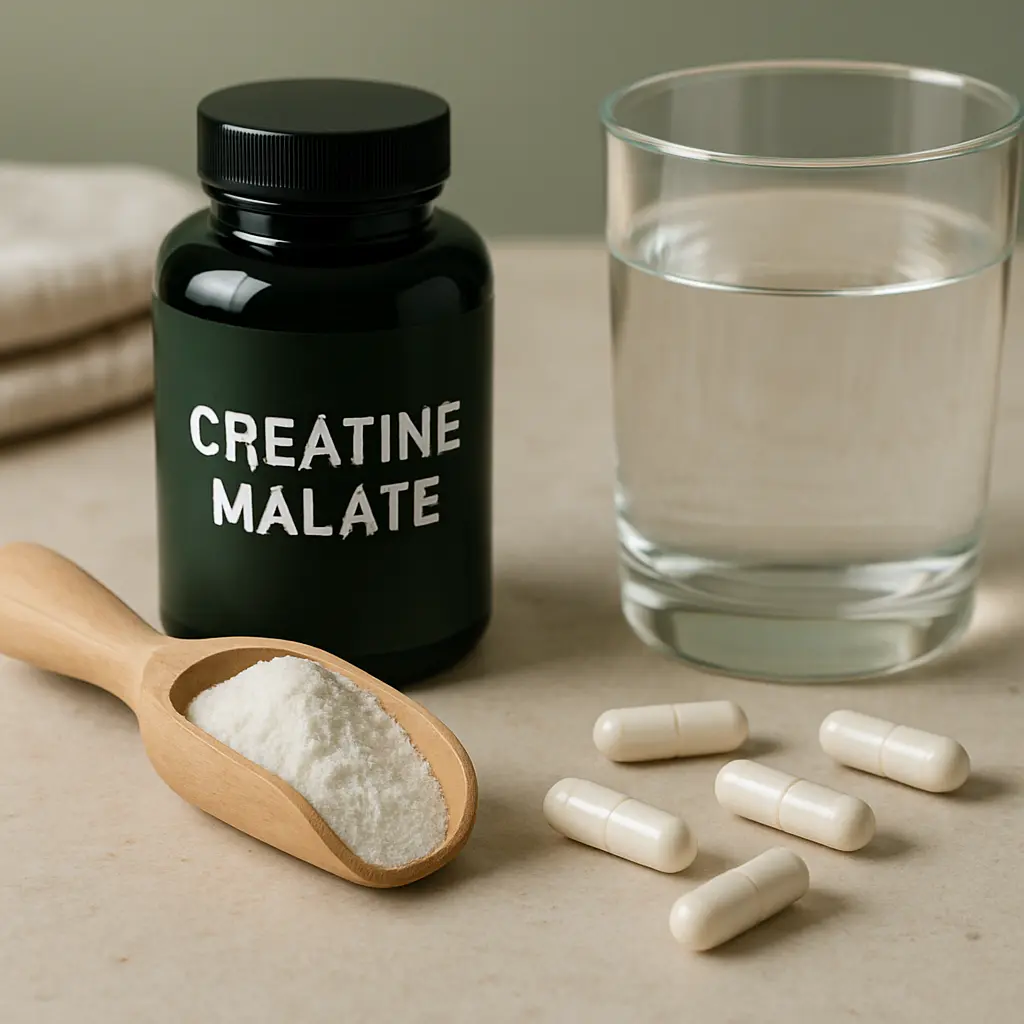
Creatine Malate: An Effective Supplement for Muscle Growth and Strength
In this page
Creatine malate is a supplement that has gained popularity among athletes and physically active individuals due to its potential to enhance muscle mass, strength, and endurance. This compound combines creatine with malic acid, offering a unique blend that can improve athletic performance. This article explores the scientific background of creatine and malic acid, the benefits of creatine malate, its applications in daily life, its safety profile, and how it can be effectively integrated into a fitness regimen.

Scientific Background and General Context
Creatine is a naturally occurring compound essential for energy production in muscle cells. It plays a crucial role in transporting high-energy phosphate groups within cells, which is vital for muscle contraction and growth. Creatine is primarily obtained from dietary sources like meat and fish, and is synthesized in small amounts by the human body. However, individuals with high physical activity levels may require additional creatine, which can be provided through supplementation.Malic acid, on the other hand, is a naturally occurring compound found in fruits like apples. It plays a key role in the Krebs cycle, a process critical for energy production in the body. By combining creatine with malic acid, creatine malate aims to enhance energy production and improve athletic performance.

How Creatine Malate Works
The Role of Creatine
Creatine’s primary function is to store and transfer high-energy phosphate groups. This process occurs in the mitochondria, where creatine receives a phosphate group, becoming phosphocreatine. This molecule then travels to areas in the cell where energy demand is high, such as muscle fibers, to donate the phosphate group, thereby releasing energy. This energy is crucial for muscle contractions during exercise and aids in muscle recovery and growth post-exercise.
The Role of Malic Acid
Malic acid serves as an efficient generator and transporter of high-energy phosphates, similar to creatine. It also acts as an intermediary in the Krebs cycle, enhancing energy production. Additionally, malic acid can stimulate anabolic processes in muscle tissue by activating pathways such as the mTOR pathway, which is crucial for muscle protein synthesis and growth.
Benefits of Creatine Malate
Enhanced Muscle Growth and Strength
Research indicates that creatine supplementation can support muscle mass and strength gains, particularly when taken post-exercise. Creatine malate, with its superior absorption and stability, may offer even more pronounced benefits by ensuring more creatine reaches muscle tissues without degradation.
Improved Energy Production and Endurance
The combination of creatine and malic acid enhances the body’s ability to generate and utilize energy efficiently. This can lead to improved performance during high-intensity exercises and faster recovery times, allowing athletes to train harder and longer.
Reduced Water Retention
Unlike creatine monohydrate, creatine malate is less likely to cause water retention. This can be beneficial for athletes in weight-class sports, as it avoids unnecessary weight gain while still providing the benefits of creatine supplementation.
Daily Use and Lifestyle Applications
Creatine malate can be incorporated into the daily routines of athletes and fitness enthusiasts aiming to enhance their physical performance. The supplement is typically taken in doses of 3-5 grams per day, often post-exercise when muscle creatine levels are depleted. This timing optimizes creatine uptake and utilization, maximizing its benefits for muscle growth and recovery.Moreover, the presence of malic acid in creatine malate adds value for those looking to boost their overall energy levels. It is particularly beneficial for individuals who engage in activities requiring sustained high energy, such as endurance sports or high-intensity interval training.
Balanced Perspective and Safety
While creatine malate is generally considered safe for most individuals, it is essential to use it responsibly. Consuming the recommended doses and staying hydrated can help minimize any potential side effects, such as gastrointestinal discomfort.Individuals with pre-existing kidney conditions or those who are pregnant should consult with a healthcare provider before beginning creatine supplementation. As with any supplement, it is crucial to consider individual health conditions and goals when incorporating creatine malate into a fitness regimen.
Conclusion
Creatine malate offers a unique and effective way to enhance muscle growth, strength, and endurance by combining the benefits of creatine and malic acid. Its improved absorption and reduced water retention make it a practical choice for athletes and fitness enthusiasts alike. As with any supplement, it’s essential to use creatine malate as part of a balanced diet and exercise program, ensuring optimal results and safety.


