

Understanding Collagen and Glucosamine: Key Components for Joint and Skin Health
In this page
Collagen and glucosamine are two compounds known for their potential benefits in supporting the health of bones, joints, and skin. While they differ in chemical structure, collagen and glucosamine offer distinct functions that complement each other in maintaining and regenerating body tissues. This article explores the roles of collagen and glucosamine, their uses in supplements, and their overall importance in a balanced health regimen.

Scientific Background and General Context
Collagen and glucosamine have long been studied for their roles in the body. Collagen, a protein composed primarily of the amino acids glycine, proline, and hydroxyproline, forms a structural network that maintains the shape and resilience of tissues. On the other hand, glucosamine, an amino sugar, plays a crucial role in the synthesis of substances that build cartilage and lubricate joints. Understanding these compounds’ biochemical functions provides insight into their applications for health and wellness.
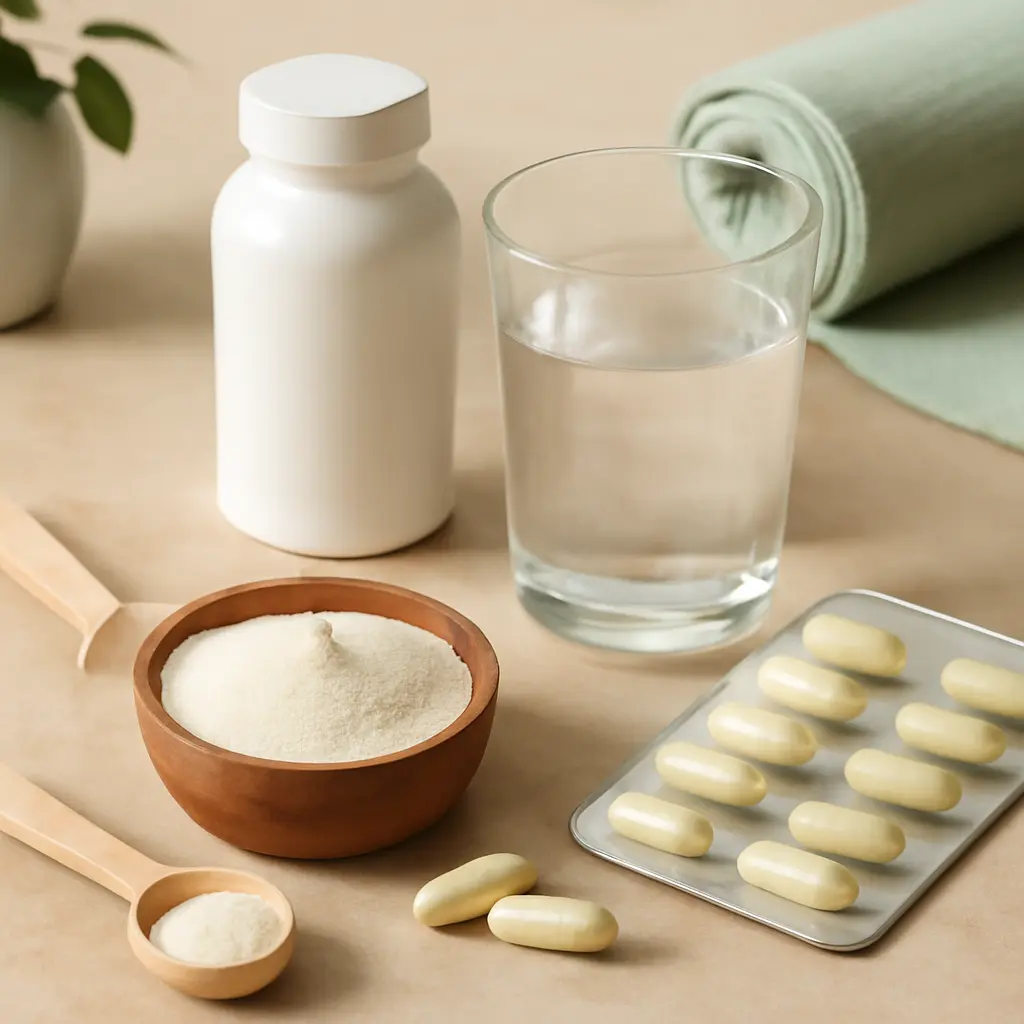
Functions of Collagen
Collagen is the most abundant protein in the human body, forming the primary structure of skin, tendons, ligaments, and other connective tissues. Its fibrous nature gives tissues their strength and elasticity, helping the body withstand stretching and mechanical stress.
Collagen for Skin, Hair, and Nails
Collagen is pivotal for maintaining the structural integrity of skin, hair, and nails. It is notably responsible for skin elasticity and firmness, with Type I collagen being the most prevalent in mammalian tissues. As people age, collagen production naturally declines, leading to wrinkles and less resilient skin. Factors such as a lack of dietary protein, vitamin deficiencies, and lifestyle choices like smoking can further impair collagen synthesis.
Functions of Glucosamine
Glucosamine is a naturally occurring compound involved in the formation of glycosaminoglycans, crucial for maintaining joint health. It combines the properties of proteins and carbohydrates and is a key building block of cartilage.
Main Component of Cartilage and Joints
Glucosamine’s role as a structural component of cartilage makes it vital for joint function. It contributes to the production of synovial fluid, which cushions joints and prevents friction, thus protecting joints from damage.
Anti-inflammatory Properties of Glucosamine
Beyond its structural role, glucosamine is known for its anti-inflammatory properties. It is often used as an alternative to non-steroidal anti-inflammatory drugs (NSAIDs) in managing osteoarthritis, offering a safer long-term use without the common side effects associated with NSAIDs, such as cardiovascular issues or gastric ulcers.
Collagen Supplements
Why Choose Hydrolyzed Collagen?
Hydrolyzed collagen, often derived from bovine or fish sources, is regarded as the most bioavailable form in supplements. This form consists of collagen peptides, which are pre-digested proteins that are easily absorbed by the digestive tract. These peptides have been studied for their potential in preventing and treating various conditions.
Collagen for Youth and Beauty
Collagen supplements are popular for their cosmetic benefits. Research suggests that they can reduce wrinkles and improve skin elasticity. Supplements typically provide 2–6 grams of hydrolyzed collagen per serving, with a recommended usage period of at least 2–3 months. Vitamin C, an essential co-factor for collagen synthesis, is often included in these supplements to enhance collagen production in the body.
Glucosamine Supplements
Glucosamine supplements, commonly in the form of glucosamine sulfate, are often sourced from shellfish or synthesized through fermentation from plant-based compounds.
Effectiveness and Safety
Glucosamine sulfate has shown effectiveness in managing osteoarthritis, making it a first-line treatment due to its safety profile and efficacy. These supplements frequently contain chondroitin, a compound similar in function to glucosamine, for added benefits.
Recommended Usage
Typically, glucosamine supplements are taken over a period of 2–3 months or longer to optimize joint health. The usual dosage ranges from 200–600 mg per serving, generally delivered in capsule or tablet form.
Comparing Collagen and Glucosamine
The primary difference between collagen and glucosamine lies in their chemical makeup: collagen is a pure protein comprising amino acids, whereas glucosamine is a compound consisting of glutamine and glucose. Collagen is predominantly sourced from animal tissues, as a specific amino acid, hydroxyproline, is rare in plant-based foods.
Additional Health Benefits
Collagen has been linked to cardiovascular health by potentially lowering cholesterol and triglyceride levels. It also contributes to the health of soft tissues, such as skin and blood vessels. Meanwhile, glucosamine’s benefits extend to the colon and lungs, with some studies suggesting anticancer properties, though more research is needed to confirm these effects.
Collaborative Role of Collagen and Glucosamine
For the Active and Elderly
Despite their differences, collagen and glucosamine are often used together to support joint and tissue health, especially in individuals prone to injuries, such as athletes and older adults. Meeting all the nutritional needs for connective tissue through diet alone can be challenging, making supplementation a viable option.
Reasons for Supplementation
Individuals with high physical demands may experience inflammation and muscle micro-damage, while older adults face challenges in nutrient absorption and appetite. Vegan diets, which exclude animal-derived collagen, may impact collagen synthesis, though the long-term consequences remain unclear.In conclusion, collagen and glucosamine are vital components for maintaining and enhancing the health of joints and skin. Their distinct yet complementary roles make them valuable additions to a balanced health regimen, supporting various bodily functions and contributing to overall wellness.


