
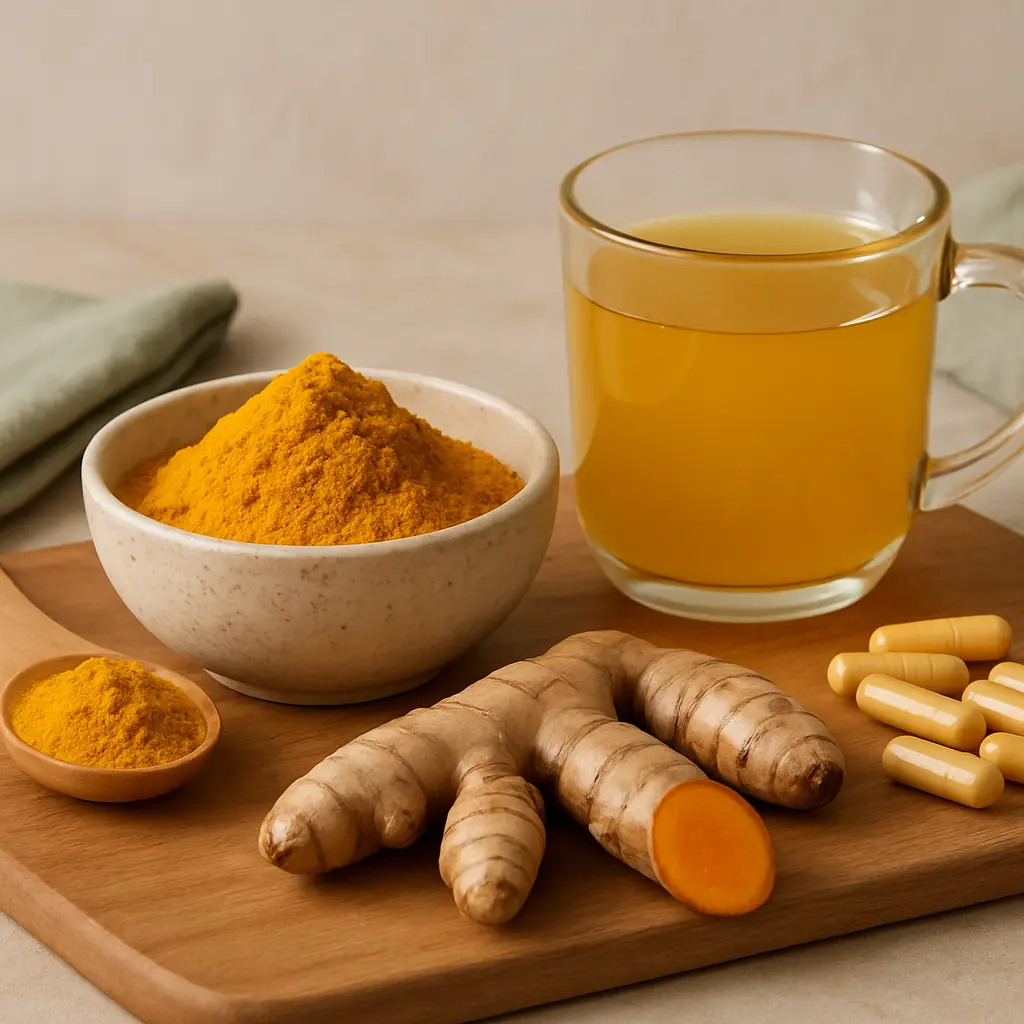
The Health Benefits of Turmeric
In this page
Turmeric, a bright yellow spice derived from the root of the Curcuma longa plant, is renowned not only for its culinary use but also for its medicinal properties. This article explores the extensive scientific research supporting turmeric’s health benefits, including its potential in managing inflammation, blood sugar, and cholesterol levels, as well as its role in weight management and joint health. We will also discuss the recommended dosage for both culinary and supplemental uses, aiming to provide a comprehensive understanding of how turmeric can be incorporated into a healthy lifestyle.

Scientific Background and General Context
Turmeric is a tropical plant belonging to the ginger family, originating from Southeast Asia. It has a long history of use in traditional medicine systems like Ayurveda and Chinese medicine. The spice is derived from the plant’s roots, which are often dried and ground into the familiar yellow powder used widely in cooking and medicine.The active ingredient in turmeric, curcumin, was identified in 1815 as one of the polyphenolic compounds responsible for its health benefits. Since the early 20th century, curcumin has been extensively studied for its anti-inflammatory, antioxidant, anticancer, neuroprotective, and cardioprotective properties. These investigations have spurred a significant interest in turmeric as both a dietary supplement and a food additive.

Culinary Uses of Turmeric
In the culinary world, turmeric is celebrated for its distinctive flavor and vibrant color. It is a key ingredient in many Asian dishes, particularly Indian cuisine, where it is used to make curry powder. The spice imparts a characteristic bitter, slightly peppery taste and a golden hue to dishes.Turmeric is not just a flavor enhancer; it acts as a natural dye and has been used to color foods and textiles. However, its significance extends beyond culinary applications. The health-promoting attributes of turmeric make it a valuable addition to any diet.
Research on Turmeric’s Health Benefits
The breadth of research into turmeric and curcumin underscores its potential in promoting health and preventing disease. Here, we explore some of the most promising areas of study:
Inflammation and Oxidative Stress
Turmeric’s most researched benefit is its ability to combat inflammation. Chronic inflammation is linked to numerous health issues, including heart disease, cancer, and Alzheimer’s. Curcumin has been shown to inhibit the activity of molecules such as NF-kB, which play a central role in inflammation. Additionally, curcumin enhances the body’s antioxidant capacity, neutralizing free radicals and reducing oxidative stress.
Blood Sugar Regulation
A meta-analysis of 59 studies found that turmeric supplementation improved fasting glucose, insulin levels, and hemoglobin A1c, markers associated with diabetes management. Curcumin’s influence on insulin resistance and glucose metabolism offers potential benefits for individuals with prediabetes or type 2 diabetes.
Cholesterol Management
Research involving 64 clinical trials indicates that turmeric can positively affect cholesterol levels, including reducing total cholesterol, triglycerides, and LDL (bad cholesterol), while increasing HDL (good cholesterol). These effects may help lower the risk of cardiovascular diseases.
Weight Management
Curcumin may aid in weight loss by reducing body mass index (BMI), body weight, and waist circumference. A review of 50 randomized, placebo-controlled trials suggests that supplementing with curcumin, alongside lifestyle changes, could be an effective strategy for weight reduction.
Joint Health
Turmeric’s anti-inflammatory properties make it a promising candidate for relieving joint pain and stiffness. Studies suggest that curcumin is more effective than a placebo and may be comparable to non-steroidal anti-inflammatory drugs (NSAIDs) in alleviating symptoms of arthritis, without the adverse effects associated with NSAIDs.
Autoimmune Conditions
Autoimmune diseases occur when the immune system mistakenly attacks the body. Studies on turmeric suggest it may improve health outcomes in conditions like psoriasis and rheumatoid arthritis, though further research is needed to confirm these findings.
Nerve Regeneration
Turmeric’s neuroprotective effects include supporting nerve regeneration, particularly following spinal cord injuries. This property is attributed to curcumin’s ability to promote functional recovery and repair neural tissues.
Vascular Health
Turmeric may enhance vascular function by regulating endothelial function, which is crucial for maintaining blood pressure and tissue perfusion. Studies indicate that curcumin supplementation could support cardiovascular health, especially in smokers.
Daily Use and Lifestyle Applications
Incorporating turmeric into your daily routine can be both simple and beneficial. Here are some practical applications:
Culinary Use
In cooking, turmeric can be added to a variety of dishes, from curries and soups to smoothies and teas. A typical serving size in recipes ranges from 1/2 to 1 teaspoon, equivalent to 1-3 grams. Not only does it add flavor and color, but it also offers an easy way to enjoy its health benefits.
Supplementation
Turmeric supplements often contain concentrated curcumin extracts, which provide higher doses than culinary use. It’s important to choose supplements that include piperine (from black pepper), as it enhances curcumin’s absorption and bioavailability. The standard dosage ranges from 200 mg to 2000 mg per day, but individual needs may vary.
Balanced Perspective and Safety
While turmeric is generally considered safe, excessive intake could lead to adverse effects. Some individuals may experience gastrointestinal discomfort or allergic reactions. It is advisable to consult a healthcare provider before starting any supplement, especially for those with existing health conditions or those taking medication.As research continues, the health-promoting potentials of turmeric and curcumin remain a subject of great interest. By integrating turmeric into a balanced diet and healthy lifestyle, individuals may harness its benefits for improved overall well-being.Turmeric stands as a remarkable example of how traditional uses of plants can align with scientific exploration, offering a promising natural option for promoting health and preventing disease.


