
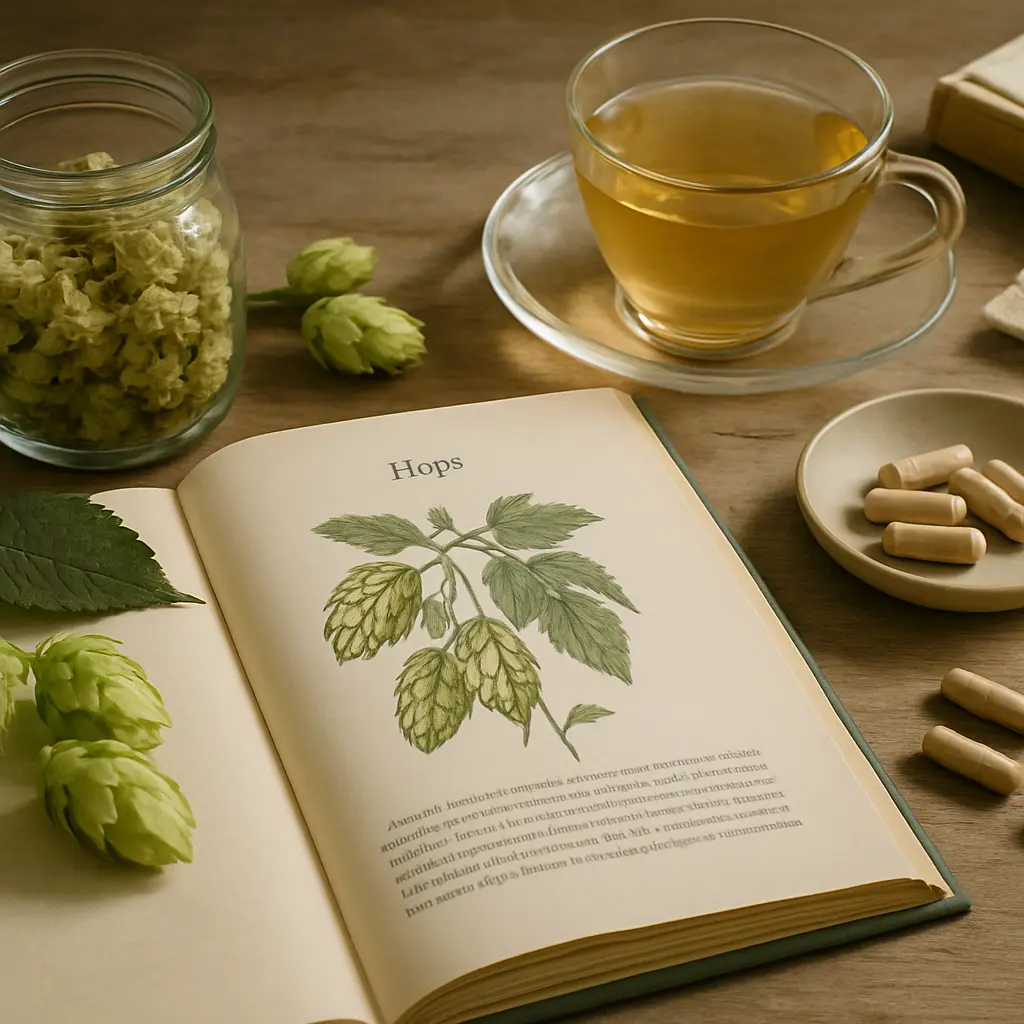
The Multifaceted Benefits of Hops: Beyond Brewing
In this page
Hops, scientifically known as Humulus lupulus, have a rich history rooted in both brewing and traditional herbal medicine. Recognized for their distinctive cones, hops are more than just a key ingredient in beer production; they have been used for centuries for their health benefits, particularly in Europe. This article delves into the scientific underpinnings of hops, their health benefits, and how they can be incorporated into a healthy lifestyle. Whether you’re interested in their soothing properties or their role in herbal medicine, this guide offers a comprehensive look at this fascinating plant.

Scientific Background and General Context
Hops are perennial climbing plants from the Cannabaceae family, closely related to hemp. They are dioecious, meaning there are separate male and female plants, with the female plants producing the cones used in brewing and herbal medicine. These cones contain lupulin glands, which are rich in essential oils and bitter compounds like humulone and lupulone. These compounds are what give beer its bitter taste and contribute to the plant’s medicinal properties.Hops are naturally found in temperate climates in Europe, Asia, and North America. Countries such as Germany, the Czech Republic, Poland, and the United States are known for their extensive hop cultivation, which supports both the brewing industry and herbal supplement production. While hops are predominantly associated with brewing, their historical use in herbal medicine for conditions like anxiety and digestive issues is well-documented.

Health Benefits and Applications
Reducing Anxiety and Improving Sleep Quality
Hops are celebrated for their sedative properties, which can help alleviate anxiety and improve sleep quality. Compounds such as xanthohumol and myrcene have been shown to interact with the central nervous system, producing a calming effect. This makes hops a popular choice for those seeking natural alternatives to manage stress and insomnia. Studies suggest that hops can be particularly effective when combined with other calming herbs like valerian and lemon balm.
Soothing Digestive Issues
Traditionally, hops have been used to treat various digestive ailments. The bitter compounds and essential oils in hops can soothe the mucous membranes of the digestive tract, reduce inflammation, and promote healthy digestion. This makes hop extracts a valuable component in herbal preparations aimed at improving gastrointestinal health.
Alleviating Menopausal Symptoms
Hops contain phytoestrogens, plant-based compounds that mimic the effects of estrogen in the body. This makes them beneficial for women experiencing menopausal symptoms like hot flashes, night sweats, and mood swings. Phytoestrogens can help balance hormone levels naturally, providing relief without the side effects often associated with hormone replacement therapies.
Daily Use and Lifestyle Applications
Incorporating hops into your daily routine can be done in various forms, including capsules, tablets, teas, and tinctures. The standard dosage of hop extract is typically between 250 to 500 mg daily, although individual needs may vary. It’s essential to adjust dosages based on personal health conditions and desired effects.For those interested in promoting relaxation and reducing anxiety, combining hops with other calming herbs can enhance their effects. Herbal teas that feature a blend of hops, valerian, and lemon balm can provide a soothing bedtime ritual, helping to establish a more restful sleep cycle.
Balanced Perspective and Safety
While hops offer numerous health benefits, it’s crucial to approach their use with a balanced perspective. As with any herbal supplement, individual reactions can vary, and it’s important to consult with a healthcare provider, especially if you are pregnant, nursing, or have underlying health conditions. Additionally, while hops are integral to beer production, consuming alcohol is not a recommended method for obtaining their health benefits. Non-alcoholic preparations such as teas and capsules are more effective and safer ways to integrate hops into a wellness routine.
Synergistic Combinations with Other Herbs
Hops are often used in combination with other herbs to enhance their therapeutic effects. For example, valerian root is known for its potent sedative properties, making it a popular complement to hops in sleep-enhancing formulations. Lemon balm offers additional calming effects, providing a gentle, synergistic boost to nervous system support. Moreover, hops’ genetic connection to cannabis suggests potential benefits when paired with cannabidiol (CBD) products, though more research is needed to fully understand this relationship.
Conclusion
Hops are a versatile plant with a rich history and a wide range of health benefits extending far beyond their role in brewing. Whether used to improve sleep quality, support digestive health, or alleviate menopausal symptoms, hops offer a natural, effective option for enhancing well-being. As always, it’s important to approach herbal supplementation thoughtfully and consult with healthcare professionals to optimize health outcomes. By integrating hops into a balanced lifestyle, you can tap into their full potential and enjoy the multitude of benefits they provide.




