
The Health Benefits and Applications of Chondroitin
In this page
Chondroitin, a key component of cartilage, plays a vital role in maintaining joint health and overall physical well-being. This article explores the scientific background of chondroitin, its potential benefits, and its practical applications in daily life. We’ll delve into the research behind its therapeutic potential, its molecular properties, and the ways it supports tissue integrity and joint mobility. Whether you’re considering chondroitin as a supplement or seeking a better understanding of its role in the body, this comprehensive guide offers insights grounded in scientific consensus.

Scientific Background and General Context
Chondroitin is a type of glycosaminoglycan, a complex carbohydrate compound that is a fundamental component of the extracellular matrix in connective tissues, including cartilage, skin, and tendons. The discovery of chondroitin dates back to the late 19th century, but its significant role in joint health was not fully appreciated until much later. In 1942, researchers identified chondroitin sulfate as one of the critical glycosaminoglycans in cartilage, alongside hyaluronic acid. These discoveries laid the groundwork for later research into its therapeutic applications, particularly concerning joint disorders like osteoarthritis.

Properties and Composition of Chondroitin
Chondroitin is composed of repeating disaccharide units that include N-acetylgalactosamine and glucuronic acid. These components are similar to sugars found in lactose but form a molecular structure that imparts unique properties. The presence of sulfate groups makes chondroitin highly hydrophilic, meaning it attracts and retains water molecules. This hydroaffinity contributes to the elasticity and resilience of cartilage, allowing it to absorb mechanical stress and maintain its integrity under pressure.
Impact on Tissues
The hydrophilic nature of chondroitin makes it essential for maintaining the hydration and viscosity of cartilage. This quality is vital for the lubrication of joints, reducing friction, and enhancing the cushioning effect needed for smooth joint function. Furthermore, chondroitin contributes to the elasticity and compressive strength of cartilage, enabling it to withstand substantial mechanical loads without wear and tear. This is especially important for athletes and individuals engaged in physical labor, as these activities increase the stress placed on joint tissues.
Therapeutic Effects of Chondroitin
Inflammation and Joint Pain
Chondroitin’s potential to alleviate inflammation and joint pain is of particular interest to researchers and healthcare professionals. It is believed to inhibit the production of pro-inflammatory compounds such as interleukins and tumor necrosis factor-alpha (TNF-alpha). By modulating these inflammatory pathways, chondroitin may reduce chronic joint pain and decrease reliance on pain medications, which often come with undesirable side effects.
Cartilage Protection and Regeneration
Chondroitin plays a protective role by inhibiting enzymes like matrix metalloproteinases (MMPs), which are responsible for cartilage breakdown. This inhibition helps preserve cartilage structure and function. Additionally, chondroitin stimulates the production of anti-inflammatory glycosaminoglycans, further supporting cartilage repair and protection against degenerative changes.
Joint Mobility and Tissue Repair
Supplementation with chondroitin may enhance joint mobility and support the repair of damaged cartilage. By aiding in the regeneration of cartilage and bone tissue, chondroitin helps maintain joint flexibility, which is crucial in preventing injuries. This is particularly beneficial for athletes and individuals with physically demanding lifestyles, where microtraumas and increased nutrient demand often occur.
Potential Prebiotic Effects
Emerging research suggests that chondroitin may have prebiotic properties, promoting the growth of beneficial gut bacteria. While more studies are needed, this potential benefit highlights chondroitin’s broader impact on health beyond joint support.
Applications of Chondroitin
Osteoarthritis and Rheumatoid Arthritis Management
Chondroitin supplements are commonly used to support joint health, particularly in individuals with osteoarthritis and rheumatoid arthritis. These conditions involve the degradation of joint tissues, leading to pain and reduced mobility. Chondroitin’s ability to mitigate inflammation and support cartilage integrity makes it a valuable component of joint health regimens.
Sports and Active Lifestyles
For athletes and active individuals, chondroitin can serve both preventive and therapeutic purposes. Its anti-inflammatory effects can benefit those with autoimmune conditions that affect the joints. Moreover, chondroitin helps protect joints during intense physical activity, reducing the risk of injury and speeding recovery.
Vegan and Vegetarian Diets
Natural sources of chondroitin include animal-derived products like meat and shellfish, making supplementation a viable option for those following vegan or vegetarian diets. Supplementation ensures that individuals on plant-based diets receive adequate chondroitin to support joint and connective tissue health.
Chondroitin Supplements
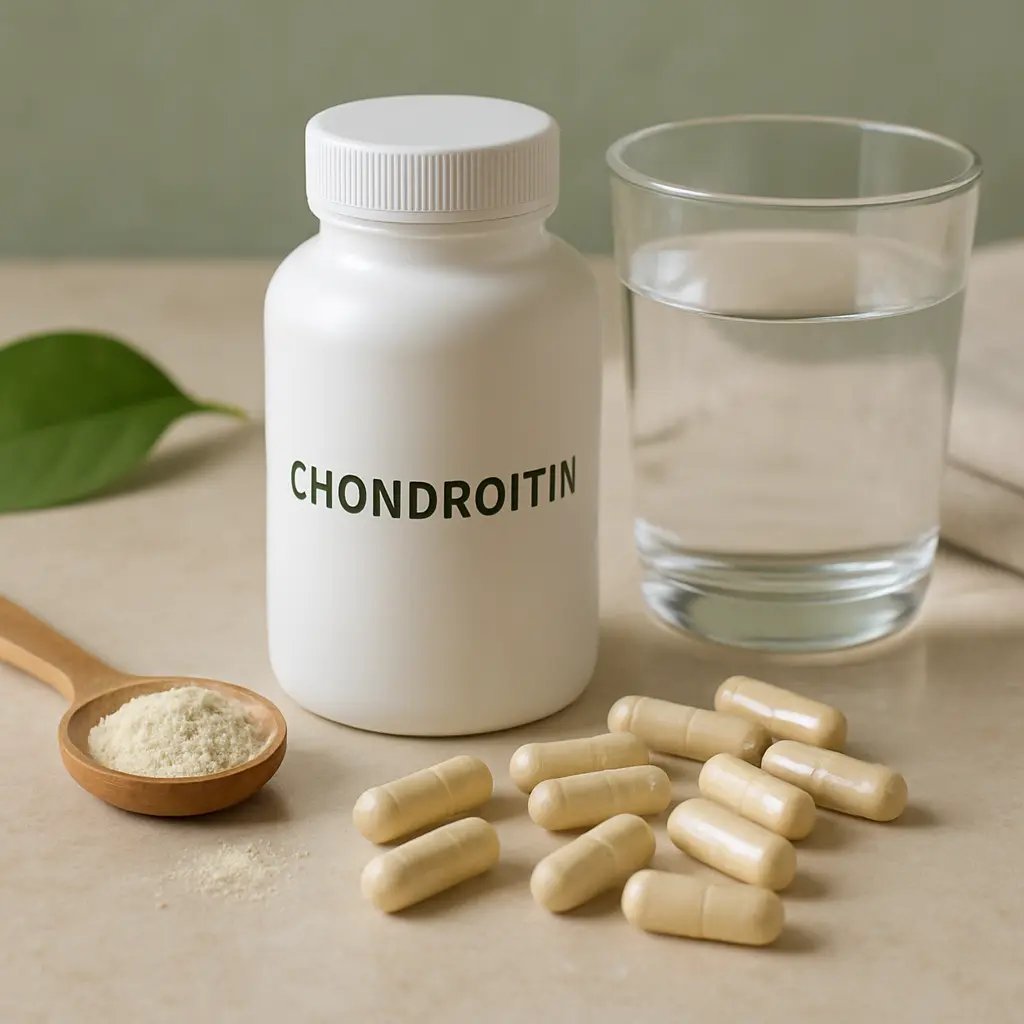
Chondroitin is typically available in supplement form as chondroitin sulfate or, less commonly, as sodium chondroitin. These supplements often also contain glucosamine, another compound known for its joint-supporting properties. Standard doses usually range from 250 to 500 mg per serving. Due to its low solubility in water, chondroitin’s bioavailability from food sources is limited to about 5-15%, making supplementation a practical approach for ensuring sufficient intake.
Dosage and Usage Recommendations
Recommended Dosages
The appropriate dosage of chondroitin depends on factors such as age, weight, health status, and supplementation goals. Typical daily doses range from 800 to 1200 mg, with supplementation periods spanning from 3 to 6 months. It is advisable to divide the daily dose into two separate intakes, one in the morning and the other in the afternoon, to maximize absorption.
Timing and Administration
Chondroitin can be taken with or without food, though consuming it with meals may slow down its absorption, allowing for more prolonged effects. Consistency in dosing times can help maintain stable levels in the body.
Allergy Considerations
While chondroitin is generally safe and well-tolerated, individuals with shellfish allergies should exercise caution, as many supplements derive chondroitin from shellfish sources. Those with known allergies should seek medical advice before beginning supplementation.
Blending Chondroitin with Other Supplements
Chondroitin is often combined with glucosamine in joint health supplements due to their complementary effects. Additionally, vitamin C can be added to support collagen production, crucial for maintaining the health of connective tissues. Some formulations may also include methylsulfonylmethane (MSM), known for its antioxidant properties and potential to enhance joint function.
Combining for Osteoarthritis
For those with osteoarthritis, supplement combinations may include MSM or hydrolyzed collagen, both of which support natural collagen synthesis and joint integrity. Such combinations might offer enhanced benefits over chondroitin alone.
Considerations for Drug Interactions
Individuals taking medications should consult healthcare professionals before starting chondroitin supplementation, as interactions may occur. A personalized approach can help optimize the benefits of supplementation while minimizing any risks.In conclusion, chondroitin offers promising benefits for joint health, supported by scientific research. Its role in reducing inflammation, protecting cartilage, and enhancing mobility makes it a valuable component of a comprehensive approach to maintaining joint and connective tissue health.


