
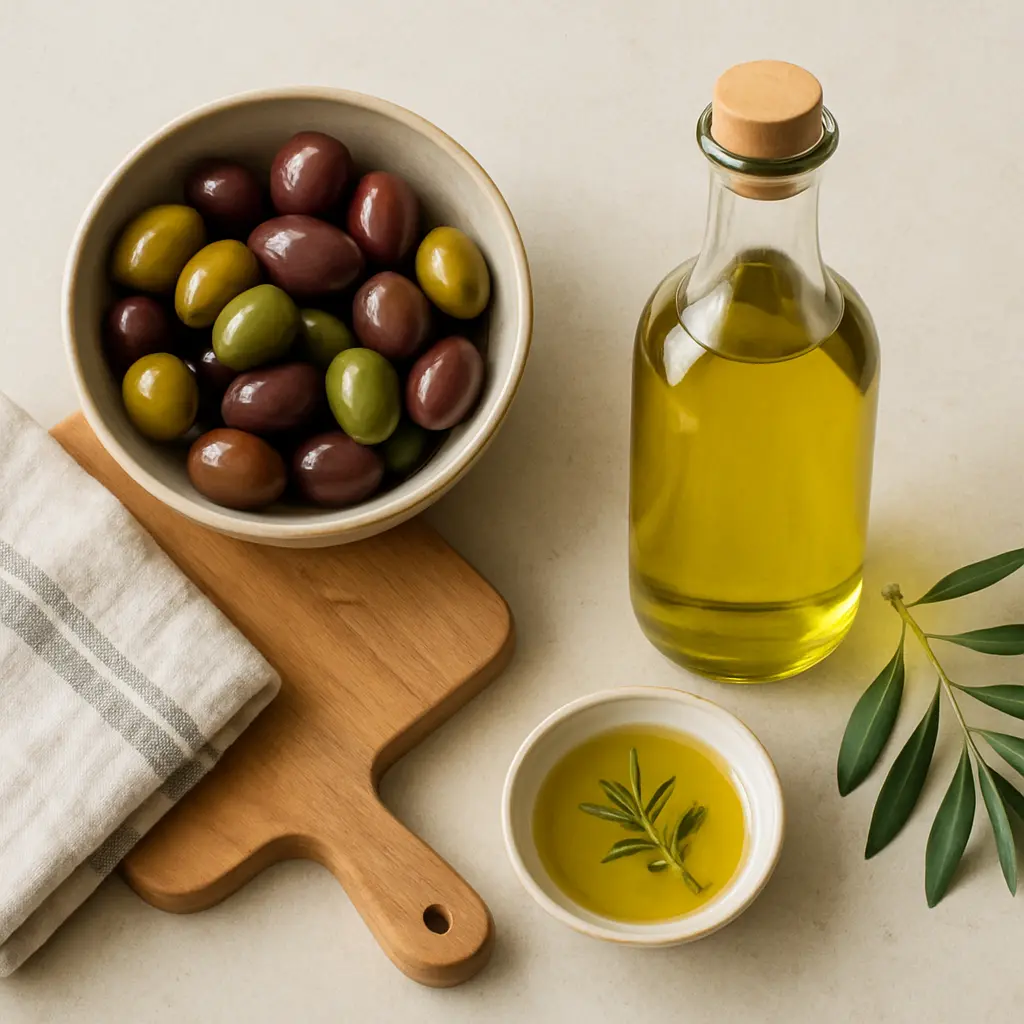
The Health Benefits of Olives and Olive Oil: A Mediterranean Legacy
In this page
The Mediterranean diet, renowned for its heart-healthy benefits, prominently features olives and olive oil. Olives, the fruit of the olive tree, and extra virgin olive oil have become staples in this diet, known for their potential to reduce inflammation and improve cardiometabolic health. While olive oil has been extensively studied, olives themselves remain less explored although both offer valuable nutrients and bioactive compounds. This article delves into the botanical characteristics of olives, the differences between green and black varieties, their nutritional properties, and the health benefits associated with olive oil consumption.

Scientific Background and General Context
Olives, scientifically known as Olea europaea L., flourish in the Mediterranean climate, characterized by hot, dry summers and mild, wet winters. The olive tree is an evergreen plant that can live for centuries due to its resilience to drought and adverse conditions. This durability has allowed olive cultivation to spread beyond the Mediterranean, reaching parts of the Middle East, Western Asia, South America, and California.The olive tree is recognizable by its twisted, gnarled trunk and silver-green leaves. It can grow up to 33 feet high, though it is often kept shorter for easier harvesting. The tree blooms with small white flowers which eventually develop into olives.

Green vs. Black Olives: A Comparison
Olives are harvested at different stages of ripeness, a factor that influences their color, taste, and nutritional composition. Green olives are picked before they ripen, while black olives are harvested when fully mature. This difference is not only in the timing of harvest but also in the processing methods post-harvest.
Characteristics and Production
- Green Olives: These are typically harvested while still immature, resulting in a firmer texture and more bitter taste. They undergo a curing process, often involving lye treatment and brining.
- Black Olives: Harvested when fully ripe, they are softer and have a milder, slightly sweet taste. These olives may be processed through fermentation or chemical oxidation.
Culinary Uses
Both types of olives have unique culinary applications:
- Green Olives: Often used in salads, appetizers, and tapenades, they add a sharp, tangy flavor.
- Black Olives: Commonly found in pizzas, casseroles, and sauces, they provide a subtle, rich note to dishes.
Fresh Olives vs. Table Olives
The olives available in stores, whether green or black, are usually “table olives,” processed for direct consumption. Raw olives are generally too bitter to eat due to high levels of oleuropein, necessitating curing methods such as brining, marinating, or sun-drying to make them palatable. Regional variations in processing techniques contribute to the diverse flavors and textures of table olives.
Nutritional Properties of Olives
Olives are a significant source of monounsaturated fats, primarily oleic acid, which is beneficial for heart health. They also provide essential vitamins like vitamin E, known for its antioxidant properties. The nutritional content of olives can vary based on their maturity and processing method. A typical serving of table olives (about 3.5 ounces) contains:
- Calories: 115–145 kcal
- Protein: 0.8–1.4 grams
- Fats: 10–15 grams
- Carbohydrates: 0.5–6 grams
However, they can be high in sodium, sometimes exceeding 1.5 grams per 3.5 ounces due to brining processes.
Olive Oil: A Concentrated Health Elixir
Despite the less extensive research on olives themselves, olive oil has been the subject of numerous studies highlighting its health benefits. Rich in phenolic compounds, such as oleuropein and hydroxytyrosol, olive oil exhibits anti-inflammatory, antioxidant, cardioprotective, and hypotensive properties.
Health Benefits of Olive Oil
Research involving large population samples has shown that olive oil consumption is associated with significant reductions in cardiovascular events, type 2 diabetes risk, and overall mortality. For instance, increasing olive oil intake by 0.88 ounces per day can lead to:
- 16% reduction in cardiovascular incidents
- 22% decrease in type 2 diabetes risk
- 11% reduction in overall mortality
These findings underscore the protective role of olive oil as part of a balanced diet.
Olive Oil in Scientific Studies
Besides cardiometabolic benefits, olive oil has been studied for its potential to regulate body composition and combat chronic inflammation by lowering levels of C-reactive protein (CRP), interleukin-6, and tumor necrosis factor-alpha (TNF-α). Such effects suggest its utility in managing inflammatory conditions.Moreover, some research indicates olive oil’s potential in preventing pressure ulcers in hospitalized patients, suggesting dermatological applications. While there is interest in its ability to reduce cancer risk, more research is needed due to the complexity and variability of the studies conducted.
Daily Use and Lifestyle Applications
Incorporating olives and olive oil into daily meals is both simple and versatile. Using olive oil as a cooking fat or salad dressing can enhance dishes with its distinctive flavor while offering health benefits. Adding olives to various recipes not only provides flavor but also introduces beneficial nutrients.When choosing olive oil, extra virgin olive oil is preferred due to its higher concentration of beneficial compounds compared to refined versions. It’s essential to store olive oil properly—cool, dark places are ideal to maintain its quality and nutritional properties.
Balanced Perspective and Safety
While olives and olive oil offer numerous health benefits, moderation is key, particularly due to the high-fat and sodium content in olives. Individuals on sodium-restricted diets should be cautious with olive consumption. Additionally, while olive oil is generally safe, consuming it in excessive amounts can lead to excessive calorie intake.Overall, olives and olive oil represent a cornerstone of the Mediterranean diet, providing both flavor and health benefits. By understanding their distinct properties and incorporating them thoughtfully into a balanced diet, they can contribute to a healthier lifestyle.


